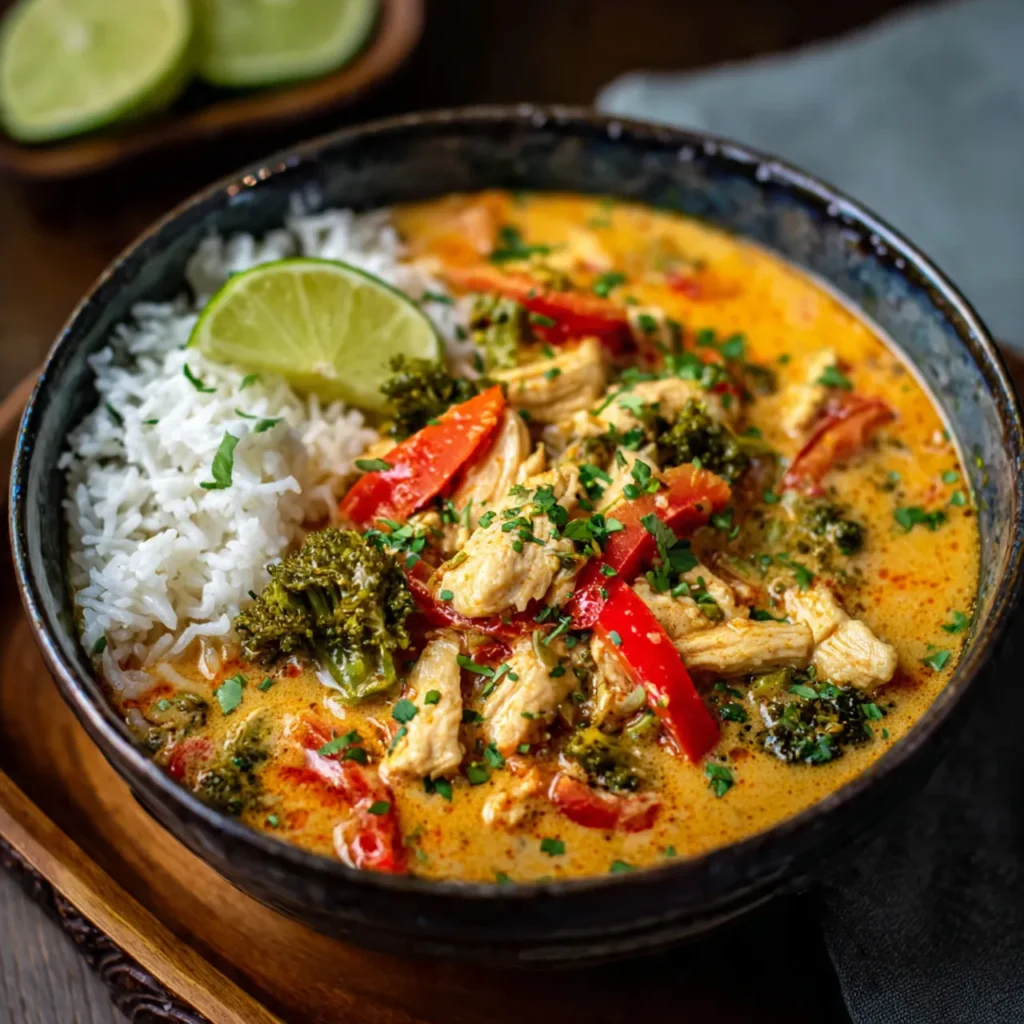
Thai Coconut Curry Chicken is a dish that perfectly captures the essence of Thai cuisine—vibrant, aromatic, and deeply flavorful. It combines tender pieces of chicken simmered in a rich coconut milk sauce infused with curry paste, garlic, ginger, and lime. The result is a creamy, comforting meal that’s both exotic and approachable. This dish is a celebration of balance—spicy yet soothing, rich yet refreshing, and complex yet simple to prepare. Whether served over jasmine rice or noodles, it’s a meal that brings warmth and satisfaction to every bite.
The Allure of Thai Coconut Curry Chicken
The magic of Thai Coconut Curry Chicken lies in its harmony of flavors. Thai cuisine is known for balancing sweet, salty, sour, and spicy elements, and this dish embodies that philosophy beautifully. The coconut milk provides a creamy base that tempers the heat of the curry paste, while lime juice and fish sauce add brightness and depth. The tender chicken absorbs all these flavors, creating a dish that’s rich, fragrant, and utterly irresistible. It’s a meal that feels indulgent yet nourishing, perfect for both weeknight dinners and special occasions.
Ingredients for the Perfect Thai Coconut Curry Chicken
For the Curry:
- 2 tablespoons vegetable oil
- 1 ½ pounds boneless, skinless chicken thighs or breasts, cut into bite-sized pieces
- 1 onion, finely chopped
- 3 cloves garlic, minced
- 1 tablespoon fresh ginger, grated
- 2 tablespoons Thai red curry paste (adjust to taste)
- 1 can (14 oz) coconut milk (full-fat for creaminess)
- 1 tablespoon fish sauce
- 1 tablespoon brown sugar
- 1 red bell pepper, sliced
- 1 cup snap peas or green beans
- Juice of 1 lime
- Fresh cilantro and Thai basil for garnish
Optional Additions:
- 1 tablespoon soy sauce for extra umami
- 1 teaspoon chili flakes for more heat
- ½ cup chicken broth for a thinner sauce
- ½ cup bamboo shoots or baby corn for texture
For Serving:
- Steamed jasmine rice or rice noodles
- Lime wedges
- Extra herbs for garnish
Step-by-Step Instructions
Step 1: Preparing the Ingredients
Before cooking, prepare all ingredients. Slice the chicken into bite-sized pieces, chop the vegetables, and measure out the curry paste and seasonings. Having everything ready ensures a smooth cooking process, as Thai curries come together quickly once the heat is on.
Step 2: Searing the Chicken
Heat the vegetable oil in a large skillet or wok over medium-high heat. Add the chicken pieces and sear until lightly browned on all sides. This step locks in the juices and adds depth to the flavor. Remove the chicken from the pan and set aside.
Step 3: Building the Flavor Base
In the same skillet, add the chopped onion and sauté for 2–3 minutes until softened. Add the minced garlic and grated ginger, stirring constantly until fragrant. These aromatics form the foundation of the curry’s flavor.
Step 4: Adding the Curry Paste
Stir in the Thai red curry paste and cook for 1–2 minutes, allowing the paste to bloom in the oil. This step intensifies the flavor and releases the essential oils from the spices. The kitchen will fill with a rich, spicy aroma that signals the beginning of something delicious.
Step 5: Creating the Sauce
Pour in the coconut milk, stirring to combine with the curry paste. Add the fish sauce and brown sugar, then bring the mixture to a gentle simmer. The coconut milk will turn a beautiful golden color as it absorbs the curry paste. Taste and adjust the seasoning—add more curry paste for heat, more sugar for sweetness, or more fish sauce for saltiness.
Step 6: Simmering the Chicken
Return the seared chicken to the skillet, stirring to coat it in the sauce. Reduce the heat to medium and let the curry simmer for 10–12 minutes, or until the chicken is cooked through and tender. The sauce will thicken slightly as it cooks, becoming rich and velvety.
Step 7: Adding the Vegetables
Add the sliced bell pepper and snap peas to the curry. Simmer for another 3–5 minutes, just until the vegetables are tender-crisp. This ensures they retain their color and texture, adding freshness and crunch to the dish.
Step 8: Finishing Touches
Stir in the lime juice to brighten the flavors. Taste once more and adjust seasoning if needed. Garnish with fresh cilantro and Thai basil for a burst of herbal aroma.
Step 9: Serving
Serve the Thai Coconut Curry Chicken over steamed jasmine rice or rice noodles. Spoon the sauce generously over the top and garnish with extra herbs and lime wedges.
Tips for the Best Thai Coconut Curry Chicken
- Use full-fat coconut milk: It creates a richer, creamier sauce.
- Don’t skip the curry paste: It’s the heart of the dish and provides authentic Thai flavor.
- Balance the flavors: Adjust sweetness, saltiness, and acidity to your taste.
- Cook the curry paste in oil: This step enhances its depth and aroma.
- Add vegetables at the end: Keeps them crisp and vibrant.
- Serve immediately: The flavors are best when freshly cooked.
Variations of Thai Coconut Curry Chicken
1. Green Curry Chicken
Use Thai green curry paste instead of red for a fresher, herbaceous flavor. Add zucchini, bamboo shoots, and Thai eggplant for authenticity.
2. Yellow Curry Chicken
Swap red curry paste for yellow curry paste and add potatoes and carrots for a milder, sweeter version.
3. Spicy Panang Curry Chicken
Use Panang curry paste and add crushed peanuts for a nutty, spicy twist.
4. Vegetable Coconut Curry
Replace chicken with tofu or chickpeas and add more vegetables like broccoli, mushrooms, and spinach for a vegetarian option.
5. Seafood Coconut Curry
Substitute chicken with shrimp, scallops, or fish for a coastal Thai variation.
6. Coconut Curry Noodle Bowl
Serve the curry over rice noodles instead of rice for a comforting noodle dish.
The Science Behind the Perfect Curry
The secret to a perfect Thai curry lies in the balance of flavors and textures. The coconut milk provides fat and creaminess, which carries the spices and balances the heat. The curry paste contains a blend of chili, lemongrass, galangal, and kaffir lime, which create layers of flavor. The fish sauce adds umami, while lime juice adds acidity to cut through the richness. The result is a dish that’s complex yet harmonious, with every bite offering a new dimension of taste.
Storing and Reheating
Thai Coconut Curry Chicken stores beautifully, making it perfect for meal prep. Store leftovers in an airtight container in the refrigerator for up to 4 days. To reheat, warm gently in a skillet over low heat, adding a splash of coconut milk or water to loosen the sauce. Avoid microwaving for too long, as it can cause the sauce to separate. This dish can also be frozen for up to 2 months—thaw overnight in the refrigerator before reheating.
Pairing Suggestions
Thai Coconut Curry Chicken pairs wonderfully with jasmine rice, basmati rice, or rice noodles. For a lighter option, serve with cauliflower rice or steamed vegetables. To complement the flavors, pair with Thai iced tea, coconut water, or a crisp white wine like Riesling or Sauvignon Blanc. For dessert, try mango sticky rice or coconut ice cream to complete the meal.
The Perfect Occasion for Thai Coconut Curry Chicken
This dish is perfect for weeknight dinners, family gatherings, or dinner parties. It’s quick enough for everyday cooking yet impressive enough for guests. The vibrant colors and aromatic flavors make it a show-stopping centerpiece for any table. Whether served casually in bowls or elegantly plated, it always brings warmth and comfort.
Troubleshooting Common Issues
- Sauce too thin: Simmer longer to reduce or add a bit of cornstarch slurry.
- Sauce too thick: Add a splash of coconut milk or chicken broth.
- Too spicy: Add more coconut milk or a teaspoon of sugar to balance the heat.
- Too bland: Add more curry paste or fish sauce for depth.
- Chicken dry: Use thighs instead of breasts for juicier results.
Why This Recipe Stands Out
Thai Coconut Curry Chicken stands out for its perfect balance of flavor, texture, and simplicity. The combination of creamy coconut milk, spicy curry paste, and tender chicken creates a dish that’s both comforting and exotic. It’s a recipe that delivers restaurant-quality results with minimal effort, making it a favorite among home cooks. The vibrant colors, fragrant aroma, and rich taste make it a dish that appeals to all the senses.
The Joy of Cooking from Scratch
Cooking Thai Coconut Curry Chicken from scratch is a rewarding experience that connects the cook to the heart of Thai cuisine. The process of sautéing aromatics, simmering coconut milk, and balancing flavors is both meditative and creative. The aroma of curry paste and coconut filling the kitchen creates anticipation and warmth. Homemade curries carry a freshness and authenticity that no takeout can match. Each spoonful reflects care, craftsmanship, and the joy of cooking.
Presentation Ideas
For an elegant presentation, serve the curry in shallow bowls with jasmine rice molded into neat domes. Garnish with fresh herbs, lime wedges, and a drizzle of coconut milk for contrast. For a rustic look, serve family-style in a large pot with rice on the side. The vibrant red sauce, green herbs, and colorful vegetables make this dish visually stunning and perfect for any table.
Nutritional Notes
Thai Coconut Curry Chicken is rich in protein and healthy fats from coconut milk. To make it lighter, use light coconut milk or reduce the oil. For a low-carb version, serve with cauliflower rice or zucchini noodles. To make it dairy-free and gluten-free, ensure the curry paste and fish sauce are free from additives. The dish remains flavorful and satisfying regardless of modifications.
The History of Thai Coconut Curry
Thai curries have a long history rooted in the country’s diverse culinary traditions. Influenced by Indian and Chinese cuisines, Thai curries evolved to include local ingredients like lemongrass, galangal, and kaffir lime. Coconut milk became a staple in southern Thailand, where it’s used to create rich, creamy sauces. Over time, different regions developed their own curry styles—red, green, yellow, and Panang—each with unique flavor profiles. Thai Coconut Curry Chicken is a modern adaptation that brings these traditional flavors to home kitchens worldwide.
Expanding the Tradition
Thai Coconut Curry Chicken has inspired countless variations across the globe. From vegan versions with tofu to fusion dishes with pasta or quinoa, the recipe’s versatility makes it a favorite among home cooks and chefs alike. Adding ingredients like pineapple, cashews, or sweet potatoes creates new flavor dimensions while maintaining the essence of the original. The adaptability of this dish ensures it remains a staple in kitchens everywhere.
Conclusion
Thai Coconut Curry Chicken is a dish that embodies the beauty of Thai cuisine—balanced, aromatic, and full of life. Its creamy coconut sauce, tender chicken, and vibrant spices create a perfect harmony that delights the senses. Whether made for a quick weeknight dinner or a special occasion, it brings warmth, comfort, and joy to every table. With its simple preparation, bold flavors, and timeless appeal, this recipe is a must-have for any cook’s collection.
This dish is more than just a meal—it’s a celebration of flavor, culture, and the joy of homemade cooking. Each bite offers a taste of Thailand, a touch of comfort, and a reminder that the simplest ingredients can create the most extraordinary experiences.