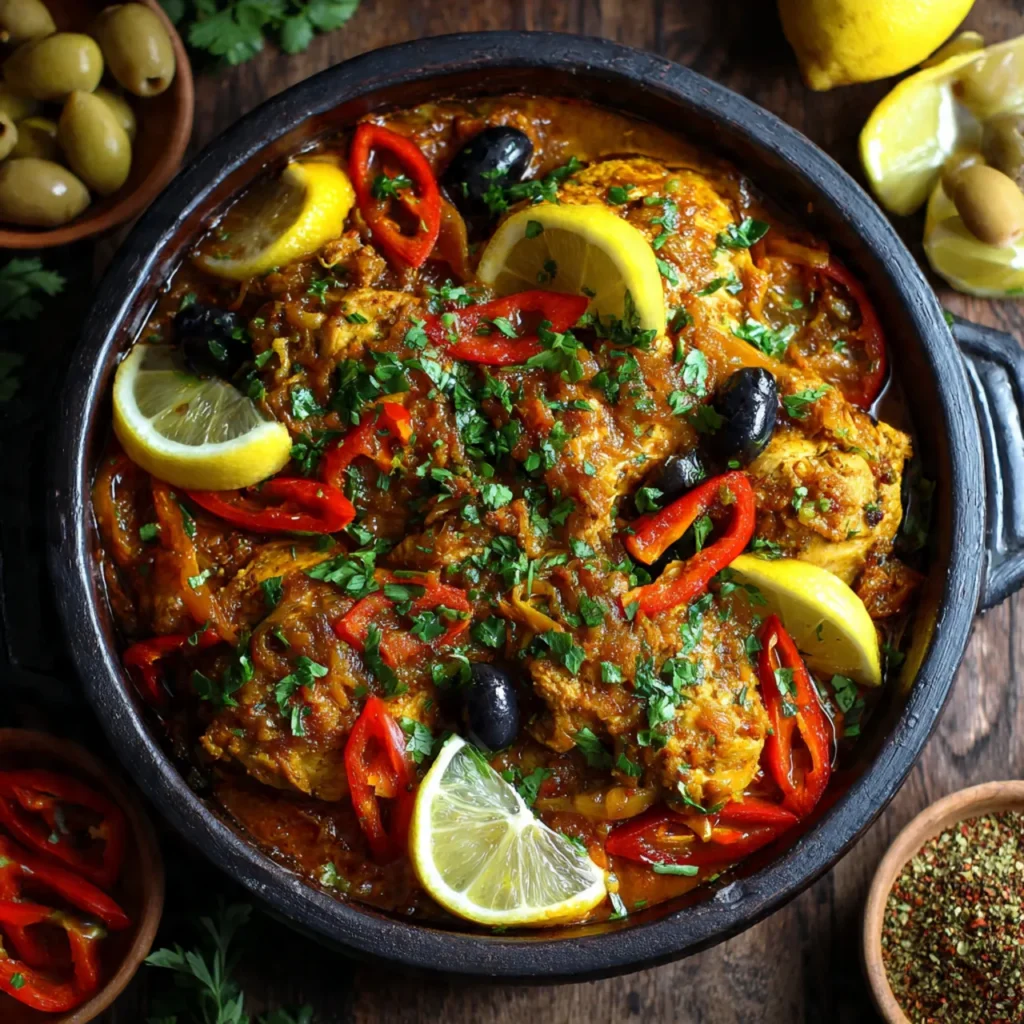
Moroccan Chicken Tagine with Lemon and Olives is a dish that captures the essence of Moroccan cuisine—rich in flavor, aroma, and tradition. This slow-cooked masterpiece combines tender chicken, preserved lemons, green olives, and a blend of warm spices that create a symphony of taste. The result is a dish that’s savory, tangy, and deeply satisfying, perfect for family gatherings or festive occasions. Cooked traditionally in a tagine, a conical clay pot that allows steam to circulate and flavors to meld, this dish is a true representation of Moroccan hospitality and culinary artistry.
The Allure of Moroccan Chicken Tagine
The word “tagine” refers both to the dish itself and the vessel it’s cooked in. The unique shape of the tagine pot allows moisture to condense and return to the food, creating tender, flavorful results. Moroccan Chicken Tagine with Lemon and Olives is one of the most iconic versions, known for its balance of savory and citrusy notes. The preserved lemons add a distinctive tang, while the olives bring a briny depth that complements the spices perfectly. This dish is a celebration of Morocco’s rich culinary heritage, where every ingredient tells a story of culture, trade, and tradition.
Ingredients for the Perfect Moroccan Chicken Tagine
For the Marinade (Chermoula):
- 1 whole chicken (about 3–4 pounds), cut into pieces, or 6 bone-in chicken thighs
- 3 cloves garlic, minced
- 1 teaspoon ground ginger
- 1 teaspoon ground turmeric
- 1 teaspoon ground cumin
- 1 teaspoon paprika
- ½ teaspoon ground cinnamon
- ½ teaspoon black pepper
- 1 teaspoon salt
- Juice of 1 lemon
- 3 tablespoons olive oil
- 2 tablespoons chopped fresh cilantro
- 2 tablespoons chopped fresh parsley
For the Tagine:
- 2 tablespoons olive oil
- 1 large onion, finely sliced
- 1 cup chicken broth or water
- 2 preserved lemons, quartered and seeds removed
- 1 cup green olives (pitted or whole)
- 1 cinnamon stick (optional)
- A pinch of saffron threads (optional, for color and aroma)
- Fresh cilantro and parsley for garnish
Optional Additions:
- 1 cup potatoes or carrots for a heartier version
- A handful of raisins for a touch of sweetness
Step-by-Step Instructions
Step 1: Marinating the Chicken
In a large bowl, combine garlic, ginger, turmeric, cumin, paprika, cinnamon, black pepper, salt, lemon juice, olive oil, cilantro, and parsley. Mix well to form a thick marinade. Add the chicken pieces and coat them thoroughly. Cover and refrigerate for at least 2 hours, preferably overnight, to allow the flavors to penetrate the meat.
Step 2: Preparing the Tagine Base
If using a traditional tagine, place it over low heat with a heat diffuser to prevent cracking. Alternatively, use a heavy-bottomed Dutch oven. Add olive oil and sliced onions to the base. Cook gently for 5–7 minutes until the onions soften and become translucent.
Step 3: Adding the Chicken
Place the marinated chicken pieces on top of the onions, arranging them evenly. Pour any remaining marinade over the chicken. Add the cinnamon stick and saffron threads if using. Cover and cook gently for 10–15 minutes, turning the chicken occasionally to brown lightly on all sides.
Step 4: Simmering the Tagine
Add the chicken broth or water, just enough to cover the base of the tagine. Cover with the lid and simmer over low heat for 45–60 minutes, checking occasionally to ensure the liquid doesn’t dry out. The chicken should become tender and infused with the spices.
Step 5: Adding Lemons and Olives
Once the chicken is nearly cooked, add the preserved lemons and green olives. Stir gently to combine, being careful not to break the lemons apart too much. Continue cooking for another 15–20 minutes, uncovered, to allow the sauce to thicken slightly and the flavors to meld.
Step 6: Serving
Garnish with fresh cilantro and parsley before serving. Moroccan Chicken Tagine is traditionally served directly from the tagine pot, accompanied by warm Moroccan bread (khobz) to soak up the flavorful sauce. It can also be served with couscous or rice for a complete meal.
Tips for the Best Moroccan Chicken Tagine
- Use preserved lemons: They provide a unique tangy flavor that fresh lemons can’t replicate.
- Marinate overnight: The longer the chicken marinates, the deeper the flavor.
- Cook slowly: Low and slow cooking ensures tender, flavorful chicken.
- Don’t rush the onions: They form the base of the sauce and add natural sweetness.
- Balance the flavors: Adjust salt and lemon to taste before serving.
- Use a tagine if possible: It enhances the authenticity and texture of the dish.
Variations of Moroccan Chicken Tagine
1. Chicken Tagine with Apricots and Almonds
Add dried apricots and toasted almonds for a sweet and savory version.
2. Spicy Chicken Tagine
Add harissa paste or chili flakes for a fiery kick.
3. Vegetable Chicken Tagine
Include carrots, potatoes, or zucchini for a heartier meal.
4. Lamb Tagine with Lemon and Olives
Substitute chicken with lamb for a richer, more robust flavor.
5. Vegan Tagine
Replace chicken with chickpeas and add more vegetables for a plant-based alternative.
6. Chicken Tagine with Artichokes and Peas
A springtime variation that adds freshness and color.
The History of Moroccan Tagine
The tagine has ancient roots in North African cuisine, dating back to the Berber tribes. The unique design of the tagine pot allows food to cook slowly in its own steam, preserving moisture and flavor. Over centuries, Moroccan cooks perfected the art of combining spices, fruits, and meats to create complex, aromatic dishes. The Chicken Tagine with Lemon and Olives is one of the most traditional and beloved versions, often served at family gatherings, weddings, and celebrations. It reflects Morocco’s history as a crossroads of cultures, where Arab, Berber, and Mediterranean influences blend seamlessly.
The Science Behind the Perfect Tagine
The secret to a perfect tagine lies in its slow-cooking process. The conical lid traps steam, which condenses and drips back into the dish, keeping the chicken moist and tender. The combination of spices—ginger, turmeric, cumin, and cinnamon—creates layers of flavor that develop over time. The preserved lemons add acidity, balancing the richness of the chicken, while the olives contribute saltiness and depth. The result is a dish that’s both complex and comforting, with every bite offering a burst of flavor.
Storing and Reheating
Store leftover Chicken Tagine in an airtight container in the refrigerator for up to 4 days. The flavors actually improve over time as they meld together. To reheat, warm gently on the stove over low heat, adding a splash of water or broth if needed. The dish can also be frozen for up to 2 months—thaw overnight in the refrigerator before reheating.
Pairing Suggestions
Moroccan Chicken Tagine pairs beautifully with traditional Moroccan bread, which is perfect for scooping up the sauce. It also goes well with couscous, rice, or quinoa. For beverages, mint tea is the classic choice, offering a refreshing contrast to the rich flavors. For a more festive pairing, serve with a glass of dry white wine or a citrusy mocktail.
The Perfect Occasion for Moroccan Chicken Tagine
This dish is ideal for family dinners, festive gatherings, or special occasions. Its vibrant flavors and beautiful presentation make it a show-stopping centerpiece for any table. It’s also perfect for meal prep, as it tastes even better the next day. Whether served at a casual dinner or a formal celebration, Moroccan Chicken Tagine brings warmth, hospitality, and a touch of exotic flair to any occasion.
Troubleshooting Common Issues
- Chicken too dry: Cook over low heat and ensure there’s enough liquid in the tagine.
- Sauce too thin: Uncover and simmer longer to reduce.
- Too salty: Rinse the olives and preserved lemons before adding.
- Not flavorful enough: Add more spices or preserved lemon juice to enhance the taste.
- Tagine cracking: Always use a heat diffuser and start with low heat.
Why This Recipe Stands Out
This Moroccan Chicken Tagine stands out for its authentic flavor and perfect balance of savory, tangy, and aromatic elements. The combination of preserved lemons and green olives creates a distinctive taste that’s both refreshing and comforting. The slow-cooked chicken becomes tender and infused with spices, while the sauce develops a rich, complex depth. It’s a dish that embodies the heart of Moroccan cooking—simple ingredients transformed into something extraordinary through time, care, and tradition.
The Joy of Cooking from Scratch
Cooking a Moroccan Chicken Tagine from scratch is a journey of flavor and discovery. The process of marinating, layering spices, and slow-cooking allows the cook to connect with centuries of culinary tradition. The aroma of simmering spices fills the kitchen, creating anticipation and warmth. Each step, from preparing the marinade to garnishing the final dish, is an act of creativity and care. Homemade tagine carries a personal touch that makes it even more special when shared with family and friends.
Presentation Ideas
For an authentic presentation, serve the tagine directly in its clay pot, surrounded by warm bread or couscous. Garnish with fresh herbs and a few extra slices of preserved lemon for color. For a modern twist, serve in shallow bowls with a drizzle of olive oil and a sprinkle of toasted almonds. The golden chicken, green olives, and bright yellow lemons create a visually stunning dish that’s as beautiful as it is delicious.
Nutritional Notes
Moroccan Chicken Tagine is a wholesome dish rich in protein, healthy fats, and antioxidants. The olive oil provides heart-healthy monounsaturated fats, while the spices offer anti-inflammatory benefits. The preserved lemons add vitamin C and probiotics, supporting digestion. To make it lighter, use skinless chicken and reduce the amount of oil. Despite modifications, the dish retains its signature flavor and nourishing qualities.
The Cultural Significance of Tagine
In Morocco, the tagine is more than just a cooking vessel—it’s a symbol of community and tradition. Meals are often shared from a communal tagine, emphasizing togetherness and hospitality. The act of breaking bread and sharing food reflects Moroccan values of generosity and connection. Chicken Tagine with Lemon and Olives, in particular, is often served at family gatherings and celebrations, representing warmth, abundance, and joy.
Expanding the Tradition
The Moroccan Chicken Tagine has inspired countless variations across North Africa and beyond. Some versions include saffron and almonds, while others incorporate vegetables or dried fruits. Modern chefs experiment with new ingredients while preserving the essence of the dish—slow cooking, aromatic spices, and balanced flavors. Its adaptability ensures that the tagine remains a beloved dish across cultures and generations.
Conclusion
Moroccan Chicken Tagine with Lemon and Olives is more than just a meal—it’s a celebration of flavor, culture, and tradition. Its tender chicken, fragrant spices, and tangy preserved lemons create a perfect harmony that delights the senses. Whether served at a festive gathering or a cozy family dinner, it brings warmth, color, and authenticity to the table. With its simple ingredients and timeless appeal, this dish embodies the heart of Moroccan cuisine—rich, soulful, and unforgettable.
Each bite of this tagine is a journey through Morocco’s vibrant flavors and traditions, reminding us that the best meals are those made with patience, passion, and love.