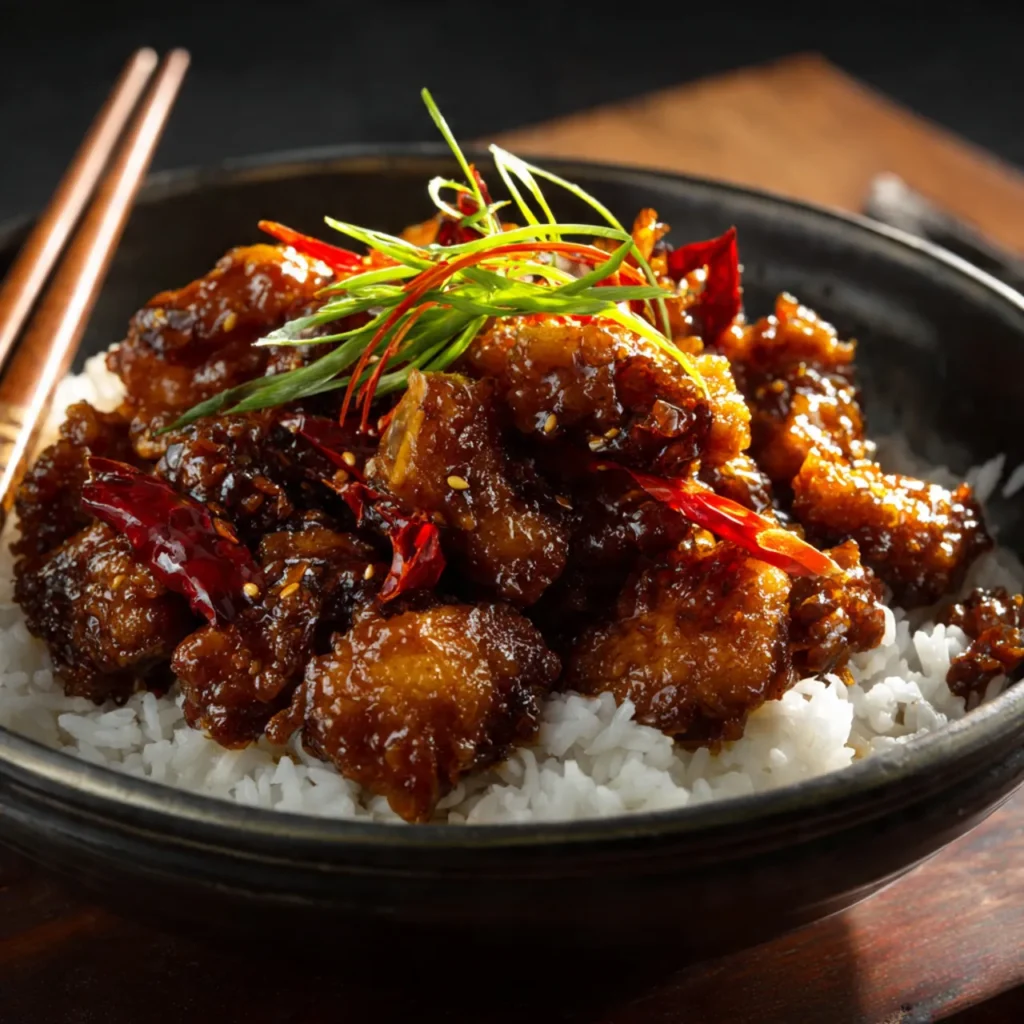
General Tso’s Chicken is one of the most iconic dishes in Chinese-American cuisine. Known for its crispy fried chicken coated in a glossy, sweet, tangy, and slightly spicy sauce, it’s a dish that perfectly balances flavor and texture. While its origins are debated, its popularity is undeniable—it’s a staple on takeout menus and a favorite for home cooks who crave bold, comforting flavors. Making General Tso’s Chicken from scratch is easier than it looks, and the result is a dish that’s fresher, crispier, and more flavorful than any restaurant version.
The Allure of General Tso’s Chicken
The appeal of General Tso’s Chicken lies in its perfect harmony of contrasts: crispy yet saucy, sweet yet spicy, savory yet tangy. The chicken is lightly battered and fried until golden, then tossed in a sauce made from soy sauce, vinegar, sugar, garlic, and chili. The result is a dish that’s rich, sticky, and deeply satisfying. Though it’s often associated with Chinese cuisine, General Tso’s Chicken is actually a Chinese-American creation, developed to suit Western palates while retaining the essence of traditional Chinese cooking techniques.
Ingredients for the Perfect General Tso’s Chicken
For the Chicken:
- 1 ½ pounds boneless, skinless chicken thighs or breasts, cut into bite-sized pieces
- 1 cup cornstarch
- 2 large eggs, beaten
- 1 tablespoon soy sauce
- 1 tablespoon rice wine or dry sherry
- ½ teaspoon salt
- Vegetable oil for frying
For the Sauce:
- 3 tablespoons soy sauce
- 2 tablespoons rice vinegar
- 3 tablespoons hoisin sauce
- 3 tablespoons sugar
- 1 tablespoon cornstarch mixed with 2 tablespoons water (slurry)
- ½ cup chicken broth or water
- 1 tablespoon sesame oil
- 2 teaspoons chili paste or 4–6 dried red chilies (adjust to taste)
Stir-Frying:
- 2 tablespoons vegetable oil
- 3 cloves garlic, minced
- 1 tablespoon grated fresh ginger
- 3 green onions, chopped (white and green parts separated)
Garnish:
- Toasted sesame seeds
- Sliced green onions
Step-by-Step Instructions
Step 1: Preparing the Chicken
In a bowl, combine the chicken pieces with soy sauce, rice wine, and salt. Let marinate for 15–20 minutes. In a separate bowl, beat the eggs. Dip each piece of chicken into the egg, then coat with cornstarch, shaking off the excess. This double coating ensures a crispy exterior that holds up to the sauce.
Step 2: Frying the Chicken
Heat about 2 inches of vegetable oil in a deep skillet or wok over medium-high heat. When the oil reaches 175°C (350°F), fry the chicken in batches for 4–5 minutes until golden brown and crispy. Remove with a slotted spoon and drain on paper towels. For extra crispiness, fry the chicken a second time for 1–2 minutes.
Step 3: Making the Sauce
In a small bowl, whisk together soy sauce, rice vinegar, hoisin sauce, sugar, chicken broth, and sesame oil. Set aside. In a clean wok or large skillet, heat 2 tablespoons of oil over medium heat. Add garlic, ginger, and the white parts of the green onions. Stir-fry for 30 seconds until fragrant. Add the chili paste or dried chilies and cook briefly to release their heat. Pour in the sauce mixture and bring to a simmer. Stir in the cornstarch slurry and cook until the sauce thickens and becomes glossy.
Step 4: Combining the Chicken and Sauce
Add the fried chicken pieces to the sauce and toss to coat evenly. Stir-fry for 1–2 minutes until the chicken is fully coated and heated through. The sauce should cling to the chicken, creating a shiny, sticky glaze.
Step 5: Serving
Transfer the General Tso’s Chicken to a serving dish. Garnish with sesame seeds and the green parts of the onions. Serve immediately with steamed jasmine rice or fried rice for a complete meal.
Tips for the Best General Tso’s Chicken
- Use chicken thighs: They stay juicy and tender after frying.
- Double-fry for crispiness: The second fry ensures the coating stays crunchy even after saucing.
- Balance the sauce: Adjust sugar, vinegar, and chili to achieve the perfect sweet-spicy-tangy balance.
- Don’t overcrowd the pan: Fry in batches to maintain oil temperature.
- Serve immediately: The chicken is best enjoyed fresh and hot.
- Use a wok: It distributes heat evenly and helps the sauce coat the chicken perfectly.
Variations of General Tso’s Chicken
1. Spicy General Tso’s Chicken
Add extra chili paste or fresh red chilies for a fiery version.
2. General Tso’s Shrimp
Substitute chicken with shrimp for a lighter, seafood twist.
3. Vegetarian General Tso’s
Use tofu or cauliflower instead of chicken for a plant-based option.
4. Baked General Tso’s Chicken
Bake the coated chicken at 200°C (400°F) for 20–25 minutes instead of frying for a healthier version.
5. Honey General Tso’s Chicken
Add 2 tablespoons of honey to the sauce for a sweeter, stickier glaze.
6. Air Fryer General Tso’s Chicken
Cook the coated chicken in an air fryer at 190°C (375°F) for 12–15 minutes, flipping halfway through.
The History of General Tso’s Chicken
Despite its name, General Tso’s Chicken is not a traditional Chinese dish. It’s named after Zuo Zongtang (General Tso), a 19th-century Chinese military leader, though there’s no evidence he had any connection to the dish. The recipe was likely created by Chinese chefs in the United States in the 1970s, blending Chinese cooking techniques with Western tastes. Chef Peng Chang-kuei, a Hunanese chef, is often credited with popularizing the dish in New York City. Over time, it became a symbol of Chinese-American cuisine—bold, flavorful, and uniquely adapted to local preferences.
The Science Behind Its Flavor
The irresistible flavor of General Tso’s Chicken comes from the balance of sweet, sour, salty, and spicy elements. The sugar caramelizes in the sauce, creating a glossy coating, while the vinegar adds brightness. Soy sauce provides umami depth, and chili adds heat. The cornstarch coating on the chicken creates a crisp texture that contrasts beautifully with the sticky sauce. This interplay of flavors and textures is what makes the dish so addictive.
Storing and Reheating
Store leftover General Tso’s Chicken in an airtight container in the refrigerator for up to 3 days. To reheat, warm in a skillet over medium heat until hot, adding a splash of water to loosen the sauce if needed. Avoid microwaving, as it can make the chicken soggy. For longer storage, freeze the cooked chicken and sauce separately for up to 2 months. Thaw overnight in the refrigerator before reheating.
The Perfect Occasion for General Tso’s Chicken
This dish is perfect for weeknight dinners, family gatherings, or casual entertaining. Its bold flavors and vibrant presentation make it a crowd-pleaser for any occasion. It’s also ideal for meal prep, as the sauce can be made ahead of time and reheated quickly. Whether served for a cozy night in or a festive dinner, General Tso’s Chicken brings restaurant-quality flavor to the home kitchen.
Troubleshooting Common Issues
- Chicken not crispy: Ensure oil is hot enough before frying and avoid overcrowding.
- Sauce too thick: Add a splash of water or broth to thin it out.
- Sauce too thin: Simmer longer or add more cornstarch slurry.
- Too sweet: Add more vinegar or soy sauce to balance.
- Too spicy: Reduce chili paste or add a bit more sugar.
Why This Recipe Stands Out
This General Tso’s Chicken recipe stands out for its perfect balance of crispiness, flavor, and simplicity. The chicken stays crunchy even after being coated in sauce, and the glaze is rich, glossy, and full of depth. The combination of sweet, tangy, and spicy notes makes it irresistible. It’s a dish that captures the essence of Chinese-American cooking—bold, comforting, and endlessly satisfying.
The Joy of Cooking from Scratch
Making General Tso’s Chicken from scratch is a rewarding experience that brings the excitement of takeout into the home kitchen. The process of marinating, frying, and tossing the chicken in sauce is both fun and fulfilling. The aroma of garlic, ginger, and chili fills the kitchen, creating anticipation and warmth. Homemade versions allow for customization—adjusting spice levels, sweetness, and texture to personal taste. It’s a dish that celebrates creativity and the joy of cooking.
Presentation Ideas
For a restaurant-style presentation, serve General Tso’s Chicken in a shallow bowl with steamed rice on the side. Garnish with sesame seeds and sliced green onions for color and texture. For a modern twist, serve over noodles or in lettuce wraps for a lighter option. The glossy sauce, golden chicken, and vibrant garnishes make this dish visually stunning and appetizing.
Nutritional Notes
General Tso’s Chicken is rich in protein and flavor but can be adjusted for different dietary preferences. To make it lighter, bake or air fry the chicken instead of deep-frying. Reduce sugar for a less sweet version, or use low-sodium soy sauce to control salt. Despite modifications, the dish retains its signature balance of sweet, spicy, and savory flavors.
The Cultural Significance of General Tso’s Chicken
General Tso’s Chicken represents the creativity and adaptability of Chinese-American cuisine. It’s a dish that bridges cultures, blending traditional Chinese techniques with Western tastes. Its popularity reflects the evolution of immigrant cooking—how recipes change and grow while preserving their roots. Today, it’s not just a takeout favorite but a symbol of culinary fusion and innovation.
Expanding the Tradition
The classic General Tso’s Chicken has inspired countless variations, from tofu and shrimp versions to healthier baked adaptations. Chefs around the world continue to reinvent the dish, experimenting with new ingredients and techniques while maintaining its signature flavor profile. Its versatility ensures that General Tso’s Chicken remains a beloved favorite across generations and cuisines.
Conclusion
General Tso’s Chicken is more than just a takeout classic—it’s a celebration of flavor, texture, and cultural fusion. Its crispy chicken, glossy sauce, and perfect balance of sweet, tangy, and spicy notes make it a dish that delights every palate. Whether served at a family dinner or a festive gathering, it brings warmth, comfort, and excitement to the table.
Each bite of General Tso’s Chicken is a reminder that great food transcends borders—uniting people through the universal language of flavor, creativity, and joy.