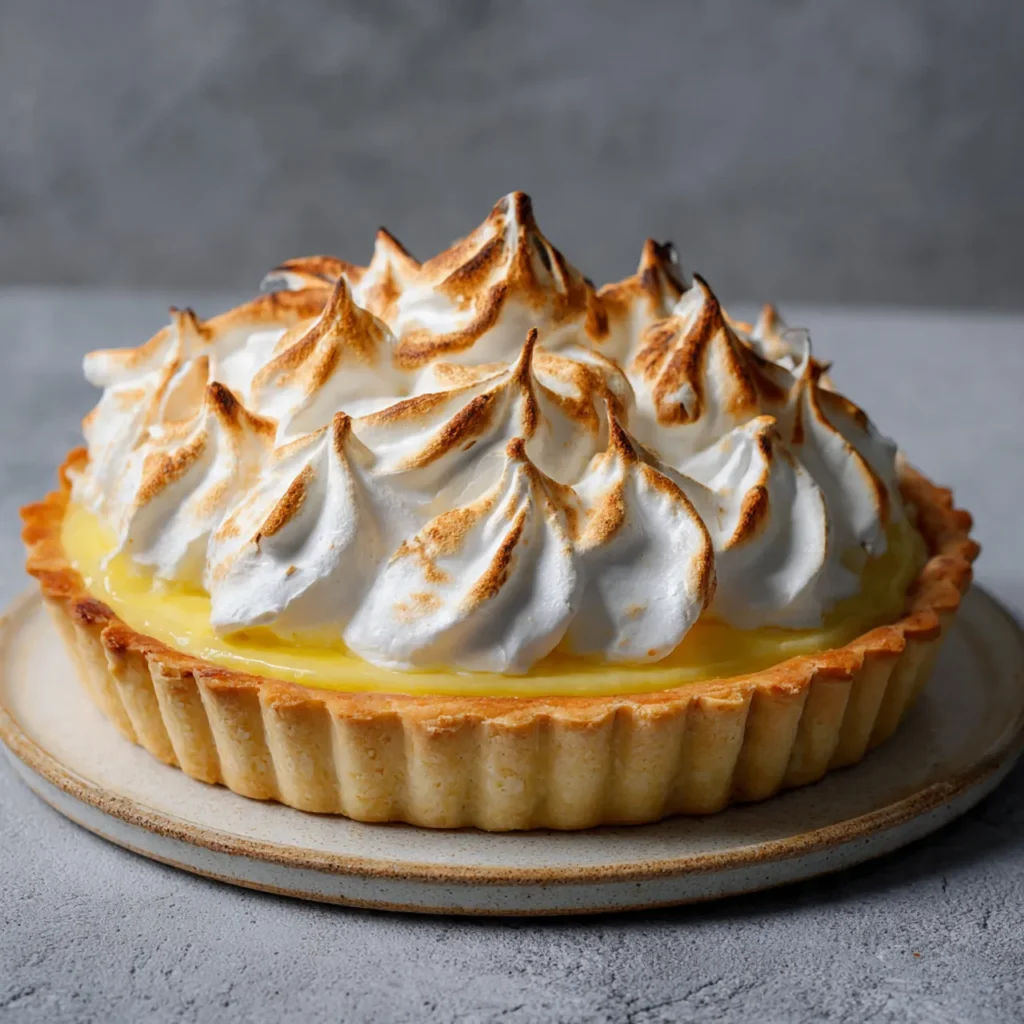
Lemon meringue pie is a dessert that perfectly balances sweet and tart, creamy and airy, rich and refreshing. With its buttery, flaky crust, vibrant lemon curd filling, and billowy meringue topping, it’s a masterpiece of contrasts and textures. Each bite offers the crispness of pastry, the smooth tang of lemon, and the light sweetness of meringue. This pie is a symbol of classic baking—elegant, comforting, and timeless. Whether served at a family gathering, a summer picnic, or a festive dinner, lemon meringue pie never fails to impress with its bright flavor and stunning presentation.
The Essence of Lemon Meringue Pie
The beauty of lemon meringue pie lies in its harmony of flavors and textures. The crust provides a sturdy, buttery base; the lemon curd adds a burst of citrus brightness; and the meringue crowns the pie with a soft, cloud-like sweetness. The contrast between the tangy filling and the sweet topping creates a balance that’s both refreshing and indulgent. The pie is baked until the meringue turns golden, creating a caramelized surface that’s as beautiful as it is delicious.
The Origins of the Dessert
Lemon meringue pie has roots in 19th-century Europe, where lemon custards and meringues were popular among pastry chefs. The combination of the two became a hallmark of refined desserts. The modern version, with its distinct layers of crust, lemon curd, and meringue, gained popularity in America in the early 20th century. It became a staple of diners and home kitchens alike, celebrated for its bright flavor and elegant appearance.
The Role of Each Component
The Crust
The crust serves as the foundation of the pie, providing texture and structure. A buttery shortcrust or pâte sucrée is ideal, offering a crisp bite that contrasts with the creamy filling.
The Lemon Filling
The lemon curd is the heart of the pie. Made with fresh lemon juice, zest, sugar, eggs, and butter, it’s smooth, tangy, and vibrant. The balance of sweetness and acidity is key to achieving the perfect flavor.
The Meringue
The meringue topping adds lightness and sweetness. Made by whipping egg whites with sugar, it forms soft peaks that are baked until golden. The meringue should be fluffy and stable, with a slightly crisp exterior and a soft interior.
Choosing the Right Ingredients
Lemons
Use fresh, ripe lemons for the best flavor. The zest adds aromatic oils, while the juice provides acidity and brightness.
Eggs
Eggs are essential for both the curd and the meringue. They thicken the filling and give the meringue its structure. Use room-temperature eggs for better volume.
Sugar
Sugar balances the tartness of the lemons and stabilizes the meringue. Fine caster sugar dissolves easily for a smooth texture.
Butter
Butter enriches the lemon curd, giving it a silky texture and mellowing the acidity.
Cornstarch
Cornstarch helps thicken the lemon filling and ensures it sets properly when cooled.
Flour
For the crust, use all-purpose flour for a tender, flaky texture.
Ingredients for 8–10 Servings
For the Crust
- 200 g (1½ cups) all-purpose flour
- 100 g (7 tbsp) unsalted butter, cold and cubed
- 2 tablespoons sugar
- 1 egg yolk
- 2–3 tablespoons cold water
- A pinch of salt
the Lemon Filling
- 4 large egg yolks
- 150 g (¾ cup) caster sugar
- 2 tablespoons cornstarch
- 250 ml (1 cup) water
- 120 ml (½ cup) fresh lemon juice
- Zest of 2 lemons
- 50 g (3½ tbsp) unsalted butter
For the Meringue
- 4 large egg whites
- 200 g (1 cup) caster sugar
- 1 teaspoon cornstarch
- ½ teaspoon cream of tartar or 1 teaspoon lemon juice
1Preparing the Crust
- Mix the dry ingredients: In a bowl, combine flour, sugar, and salt.
- Add the butter: Rub the butter into the flour with fingertips or a pastry cutter until the mixture resembles coarse crumbs.
- Add the egg yolk and water: Mix in the egg yolk and enough cold water to bring the dough together.
- Chill: Shape into a disk, wrap in plastic, and refrigerate for 30 minutes.
- Roll out: On a floured surface, roll the dough into a circle about 3 mm thick.
- Line the pan: Fit the dough into a 23 cm (9-inch) pie dish, trim the edges, and prick the base with a fork.
- Blind bake: Line with parchment paper, fill with baking beans, and bake at 180°C (350°F) for 15 minutes. Remove the beans and bake for another 10 minutes until golden. Let cool.
2Preparing the Lemon Filling
- Mix the dry ingredients: In a saucepan, whisk together sugar and cornstarch.
- Add liquids: Gradually whisk in water, lemon juice, and zest until smooth.
- Cook: Place over medium heat and cook, stirring constantly, until the mixture thickens and begins to bubble.
- Add the yolks: In a separate bowl, whisk the egg yolks. Slowly pour in a small amount of the hot mixture to temper the eggs, then return everything to the saucepan.
- Finish with butter: Cook for another 2 minutes, then remove from heat and stir in the butter until smooth.
- Pour into crust: Spread the hot filling into the baked crust.
3Preparing the Meringue
- Whip the egg whites: In a clean bowl, beat the egg whites with cream of tartar until soft peaks form.
- Add sugar gradually: Add sugar one tablespoon at a time, beating until stiff, glossy peaks form.
- Add cornstarch: Fold in cornstarch to stabilize the meringue.
Assembling the Pie
- Top with meringue: Spoon the meringue over the hot lemon filling, spreading it to the edges to seal completely. This prevents the meringue from shrinking.
- Create peaks: Use the back of a spoon to create decorative swirls and peaks.
- Bake: Bake at 180°C (350°F) for 10–12 minutes, or until the meringue is golden brown.
- Cool: Let the pie cool at room temperature for 1 hour, then refrigerate for at least 3 hours before serving.
The Perfect Texture and Flavor
The ideal lemon meringue pie has a crisp, buttery crust, a smooth and tangy lemon filling, and a light, fluffy meringue topping. The filling should be firm enough to hold its shape when sliced but soft enough to melt in the mouth. The meringue should be glossy and slightly caramelized on top, with a soft, marshmallow-like interior. The combination of sweet and tart, creamy and crisp, makes this dessert irresistible.
Variations and Add-Ins
- With lime: Replace lemon with lime juice and zest for a tropical twist.
- With orange: Add orange zest for a sweeter, milder flavor.
- With coconut: Sprinkle toasted coconut on top of the meringue for texture.
- With berries: Serve with fresh raspberries or strawberries for color and freshness.
- With shortbread crust: Use crushed shortbread cookies instead of pastry for a buttery variation.
- Mini pies: Make individual portions in tartlet pans for elegant servings.
Tips for Success
- Use fresh lemons: Bottled juice lacks the brightness of fresh lemons.
- Seal the meringue: Spread it over the hot filling to prevent separation.
- Avoid overbeating: Overwhipped meringue can become grainy.
- Cool gradually: Rapid cooling can cause the meringue to weep.
- Use cornstarch: It stabilizes both the filling and the meringue.
- Serve chilled: The pie slices cleanly and tastes best when cold.
Presentation Ideas
- Classic style: Serve with a light dusting of powdered sugar.
- Elegant look: Add lemon zest curls or candied lemon slices on top.
- Rustic charm: Let the meringue peaks brown unevenly for a homemade look.
- Modern plating: Serve slices with a drizzle of lemon syrup and a sprig of mint.
Pairing Suggestions
The bright, citrusy flavor of lemon meringue pie pairs beautifully with light, refreshing beverages:
- Tea: Earl Grey or chamomile complements the lemon notes.
- Coffee: A cappuccino or latte balances the sweetness.
- Wine: A sweet Riesling or Moscato enhances the citrus flavor.
- Non-alcoholic: Serve with sparkling water infused with lemon or mint.
Nutritional Information (per serving)
- Calories: 380 kcal
- Protein: 6 g
- Fat: 18 g
- Carbohydrates: 45 g
- Fiber: 1 g
Storing and Serving
Lemon meringue pie can be stored in the refrigerator for up to 3 days. Cover loosely with plastic wrap to avoid condensation on the meringue. Do not freeze, as the texture of the meringue and filling can change. For the best flavor, serve chilled but not icy cold.
The Flavor Experience
Every bite of lemon meringue pie is a symphony of textures and flavors. The crust is crisp and buttery, the lemon filling is smooth and tangy, and the meringue is light and sweet. The aroma of fresh lemon fills the air, while the golden peaks of meringue add visual appeal. The balance of tartness and sweetness makes it refreshing yet indulgent, a dessert that awakens the palate and satisfies the senses.
Making It for Special Occasions
Lemon meringue pie is perfect for celebrations, from spring brunches to holiday dinners. Its bright flavor and elegant appearance make it a centerpiece-worthy dessert. For festive occasions, decorate with candied lemon slices, edible flowers, or a dusting of gold powder. It’s also ideal for summer gatherings, where its cool, citrusy flavor provides a refreshing finish to any meal.
Common Mistakes to Avoid
- Overcooking the filling: It can become rubbery.
- Underbaking the crust: It may turn soggy under the filling.
- Not sealing the meringue: Gaps can cause it to shrink or weep.
- Overbaking the meringue: It can dry out and crack.
- Skipping the cooling time: The filling needs time to set properly.
A Dessert for Every Season
While lemon meringue pie shines in spring and summer, its bright flavor makes it welcome year-round. In winter, it brings a burst of sunshine to the table; in autumn, it pairs beautifully with spiced teas and warm drinks. Its timeless appeal and versatility make it a dessert that transcends seasons and trends.
The Joy of Homemade Baking
Making lemon meringue pie at home is a rewarding experience that combines precision and creativity. The process—rolling the crust, whisking the curd, whipping the meringue—is both meditative and satisfying. The aroma of lemon and sugar fills the kitchen, and the final result is a dessert that looks as stunning as it tastes. It’s a reminder that homemade baking is about more than just ingredients—it’s about care, patience, and the joy of creating something beautiful from scratch.
Conclusion
Lemon meringue pie is a timeless classic that embodies the perfect balance of flavor and texture. The buttery crust, tangy lemon filling, and fluffy meringue topping come together to create a dessert that’s both elegant and comforting. Each bite offers a harmony of sweetness and tartness, creaminess and crispness, lightness and richness. Whether served at a family gathering or a special celebration, this pie captures the essence of classic baking—simple, refined, and unforgettable. It’s more than just a dessert; it’s a celebration of flavor, craftsmanship, and the joy of sharing something truly special.