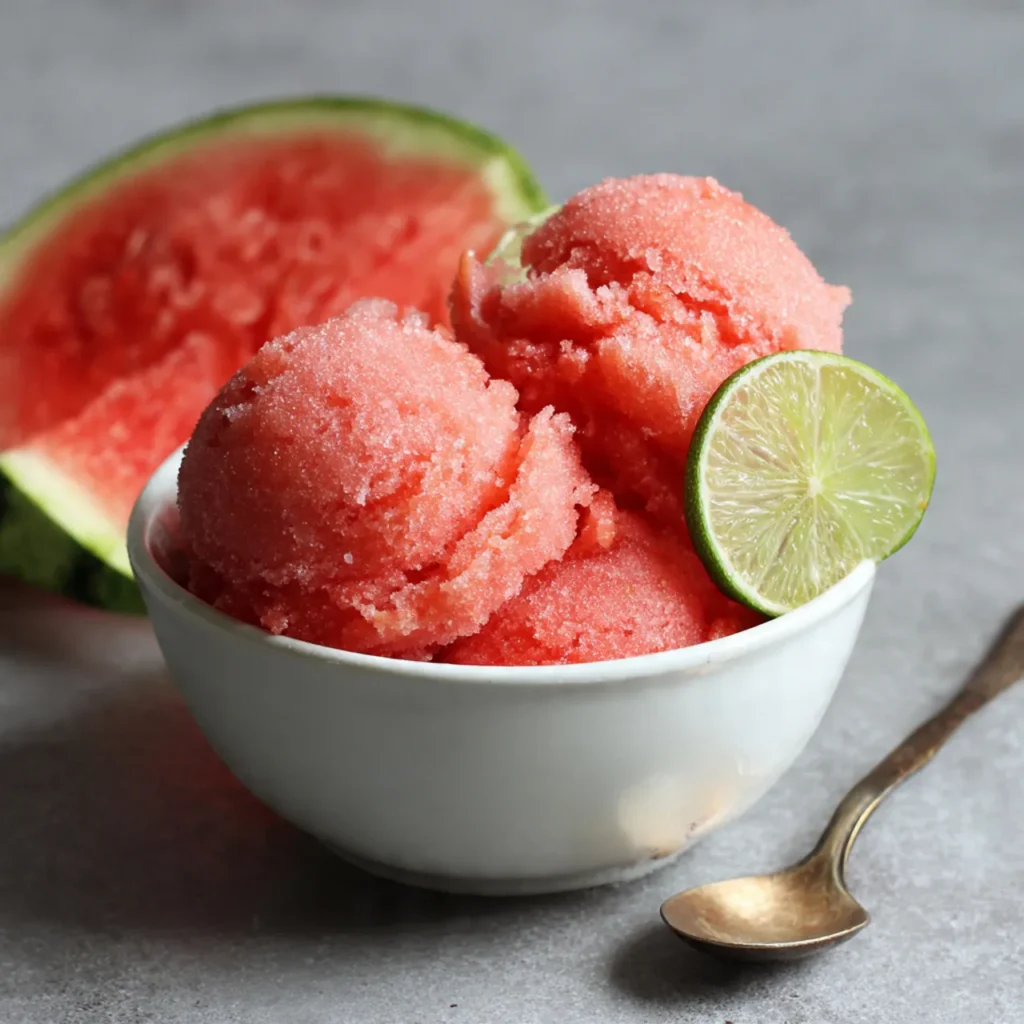
Watermelon sorbet is the ultimate summer dessert—light, refreshing, and bursting with the natural sweetness of ripe watermelon. With its vibrant color, smooth texture, and cooling flavor, it’s the perfect way to beat the heat while enjoying a treat that feels both indulgent and healthy. Unlike ice cream, which is rich and creamy, sorbet is dairy-free and relies on the natural juiciness of fruit for its flavor and texture. Watermelon, with its high water content and delicate sweetness, makes an ideal base for sorbet, creating a dessert that’s as beautiful as it is delicious. Whether served as a palate cleanser, a light dessert, or a frozen snack on a hot day, watermelon sorbet captures the essence of summer in every spoonful.
The Essence of Watermelon Sorbet
The beauty of watermelon sorbet lies in its simplicity. It requires only a few ingredients—fresh watermelon, sugar, lime juice, and a touch of salt—but the result is a dessert that feels luxurious and refreshing. The key is to use perfectly ripe watermelon, which provides natural sweetness and a vibrant red color. The lime juice adds brightness and balance, cutting through the sweetness and enhancing the fruit’s flavor. The texture should be smooth and velvety, melting on the tongue with a burst of cool, fruity freshness. It’s a dessert that’s light yet satisfying, sweet yet refreshing, and simple yet elegant.
The Origins of Sorbet
Sorbet has ancient roots, dating back to early civilizations that enjoyed frozen fruit drinks made with snow and honey. The modern version of sorbet, as a churned frozen dessert, originated in Italy and France, where it became a staple of fine dining. Traditionally served between courses to cleanse the palate, sorbet evolved into a popular dessert in its own right. Watermelon sorbet, in particular, gained popularity in warmer climates for its refreshing qualities and vibrant flavor. Today, it’s enjoyed worldwide as a symbol of summer indulgence and natural simplicity.
The Role of Each Ingredient
Watermelon
The star of the dessert, watermelon provides sweetness, color, and hydration. Its high water content makes it ideal for sorbet, creating a smooth, icy texture without the need for dairy.
Sugar
Sugar not only sweetens the sorbet but also affects its texture. It lowers the freezing point, preventing the sorbet from becoming too hard and ensuring a smooth, scoopable consistency.
Lime Juice
Lime juice adds acidity, which balances the sweetness of the watermelon and enhances its flavor. It also adds a subtle tang that makes the sorbet more refreshing.
Salt
A pinch of salt intensifies the sweetness and brings out the natural flavor of the fruit.
Optional Additions
Mint, basil, or a splash of vodka can be added for extra flavor and sophistication. Mint adds freshness, basil adds an herbal note, and vodka helps keep the sorbet soft by preventing over-freezing.
Choosing the Right Ingredients
Watermelon
Select a ripe, seedless watermelon with deep red flesh and a sweet aroma. The fruit should feel heavy for its size, indicating juiciness. Avoid overripe melons, which can have a mushy texture.
Sugar
Use granulated sugar for a clean sweetness. For a more complex flavor, substitute part of the sugar with honey or agave syrup.
Lime Juice
Freshly squeezed lime juice is essential for the best flavor. Bottled juice lacks the brightness of fresh citrus.
Herbs and Flavorings
Fresh mint or basil can elevate the flavor, while a touch of ginger or chili adds a surprising twist.
Ingredients for 6–8 Servings
- 1 kg (about 6 cups) cubed seedless watermelon
- 100 g (½ cup) granulated sugar
- 2 tablespoons lime juice (about 1 lime)
- A pinch of salt
- Optional: 1 tablespoon vodka or 1 tablespoon chopped fresh mint
Preparing the Watermelon
- Cut and cube: Slice the watermelon into chunks, removing any seeds.
- Blend: Place the watermelon cubes in a blender or food processor and blend until smooth.
- Strain (optional): For a smoother texture, strain the puree through a fine mesh sieve to remove pulp.
Making the Sorbet Base
- Dissolve the sugar: In a small saucepan, combine sugar and 60 ml (¼ cup) of water. Heat gently until the sugar dissolves completely, creating a simple syrup. Let cool.
- Combine ingredients: In a large bowl, mix the watermelon puree, cooled syrup, lime juice, and salt. Stir until well combined.
- Taste and adjust: Taste the mixture and adjust sweetness or acidity as needed. The flavor should be slightly sweeter than desired, as freezing dulls sweetness.
Churning the Sorbet
- Chill the mixture: Refrigerate the sorbet base for at least 2 hours, or until completely cold.
- Churn: Pour the chilled mixture into an ice cream maker and churn according to the manufacturer’s instructions, usually 20–25 minutes, until thick and slushy.
- Freeze: Transfer the sorbet to an airtight container and freeze for at least 3 hours, or until firm.
Without an Ice Cream Maker
- Freeze the mixture: Pour the sorbet base into a shallow dish and freeze for 1 hour.
- Stir: After 1 hour, stir the mixture with a fork to break up ice crystals. Repeat every 30 minutes for 3–4 hours, until smooth and frozen.
- Blend before serving: For a smoother texture, blend the frozen sorbet briefly before serving.
The Perfect Texture and Flavor
The perfect watermelon sorbet should be smooth, scoopable, and bursting with fresh flavor. The texture should be light and velvety, not icy or grainy. The flavor should balance sweetness and acidity, with the watermelon’s natural freshness shining through. The color should be a vibrant pink-red, reflecting the fruit’s natural beauty. When served, it should melt slowly on the tongue, releasing waves of cool, fruity sweetness that refresh the palate.
Variations and Add-Ins
- Mint Watermelon Sorbet: Add a handful of fresh mint leaves to the blender for a cool, herbal twist.
- Spicy Watermelon Sorbet: Add a pinch of chili powder or cayenne for a subtle heat that contrasts with the sweetness.
- Coconut Watermelon Sorbet: Replace part of the watermelon puree with coconut water for a tropical flavor.
- Berry Watermelon Sorbet: Blend in strawberries, raspberries, or blueberries for a mixed fruit version.
- Basil Watermelon Sorbet: Add a few basil leaves for a sophisticated, aromatic flavor.
- Lemon Watermelon Sorbet: Substitute lime juice with lemon juice for a brighter, tangier taste.
Tips for Success
- Use ripe watermelon: The flavor depends entirely on the quality of the fruit.
- Chill the base: A cold mixture freezes faster and creates a smoother texture.
- Don’t skip the sugar: It prevents the sorbet from freezing too hard.
- Add a touch of alcohol: A tablespoon of vodka keeps the sorbet soft and scoopable.
- Freeze properly: Store in an airtight container to prevent ice crystals.
- Serve at the right temperature: Let the sorbet sit at room temperature for 5 minutes before scooping.
Presentation Ideas
- Classic style: Serve scoops in chilled bowls or glasses with a sprig of mint.
- Elegant look: Serve in hollowed-out watermelon shells for a stunning presentation.
- Modern plating: Add a drizzle of balsamic reduction or a sprinkle of sea salt for contrast.
- Festive version: Garnish with lime zest, edible flowers, or fresh berries.
- Layered dessert: Alternate layers of watermelon sorbet and coconut sorbet for a tropical parfait.
Pairing Suggestions
The light, fruity flavor of watermelon sorbet pairs beautifully with refreshing beverages and complementary desserts:
- Drinks: Sparkling water with lime, iced green tea, or rosé wine.
- Desserts: Pair with shortbread cookies, fruit tarts, or lemon bars.
- Cocktails: Serve as a float in prosecco or blend into a frozen margarita.
Nutritional Information (per serving)
- Calories: 90 kcal
- Protein: 1 g
- Fat: 0 g
- Carbohydrates: 23 g
- Fiber: 1 g
Storing and Serving
Watermelon sorbet can be stored in the freezer for up to 2 weeks. To prevent ice crystals, press a piece of parchment paper directly onto the surface before sealing the container. When ready to serve, let it sit at room temperature for 5–10 minutes to soften slightly. For the best texture, avoid refreezing melted sorbet.
The Flavor Experience
Every spoonful of watermelon sorbet is a burst of pure refreshment. The first taste delivers the cool sweetness of ripe watermelon, followed by a hint of lime that brightens the flavor. The texture is smooth and icy, melting slowly to release waves of fruity freshness. The aroma of watermelon evokes summer days, picnics, and sunshine, while the vibrant color adds visual delight. It’s a dessert that feels light yet satisfying, indulgent yet healthy—a perfect balance of nature’s sweetness and culinary simplicity.
Making It for Special Occasions
Watermelon sorbet is ideal for summer gatherings, garden parties, and festive celebrations. Its bright color and refreshing flavor make it a crowd-pleaser that appeals to all ages. For elegant occasions, serve it in martini glasses with a garnish of mint or lime zest. For casual events, scoop it into cones or cups for easy enjoyment. It can also be used as a palate cleanser between courses or as a base for creative cocktails. Its versatility and beauty make it a dessert that elevates any occasion.
Common Mistakes to Avoid
- Using unripe watermelon: It results in a bland sorbet.
- Skipping the sugar: The sorbet will freeze too hard.
- Not chilling the base: Warm mixtures form large ice crystals.
- Overfreezing: The sorbet can become icy and lose its smooth texture.
- Adding too much liquid: It can dilute the flavor and affect consistency.
A Dessert for Every Season
While watermelon sorbet is most associated with summer, it can be enjoyed year-round. In spring, it offers a refreshing contrast to heavier desserts; in autumn, it pairs beautifully with spiced cakes; and in winter, it brings a taste of sunshine to cold days. Its lightness and versatility make it suitable for any season, offering a refreshing finish to any meal.
The Joy of Homemade Freezing
Making watermelon sorbet at home is a rewarding experience that combines simplicity and creativity. The process—blending fruit, adjusting sweetness, and watching it freeze into a smooth, icy treat—is both relaxing and satisfying. The aroma of fresh watermelon fills the kitchen, and the first scoop reveals a dessert that’s as beautiful as it is delicious. It’s a reminder that the best desserts often come from the simplest ingredients, transformed with care and attention.
Conclusion
Watermelon sorbet is a dessert that embodies the essence of summer—fresh, light, and irresistibly refreshing. With its vibrant color, smooth texture, and pure fruit flavor, it offers a perfect balance of sweetness and coolness. Each bite is a celebration of simplicity and nature’s bounty, capturing the joy of ripe watermelon in frozen form. Whether served as a light dessert, a palate cleanser, or a refreshing treat on a hot day, watermelon sorbet brings a touch of elegance and delight to any occasion. It’s more than just a dessert—it’s a celebration of freshness, creativity, and the simple pleasure of enjoying something truly refreshing.