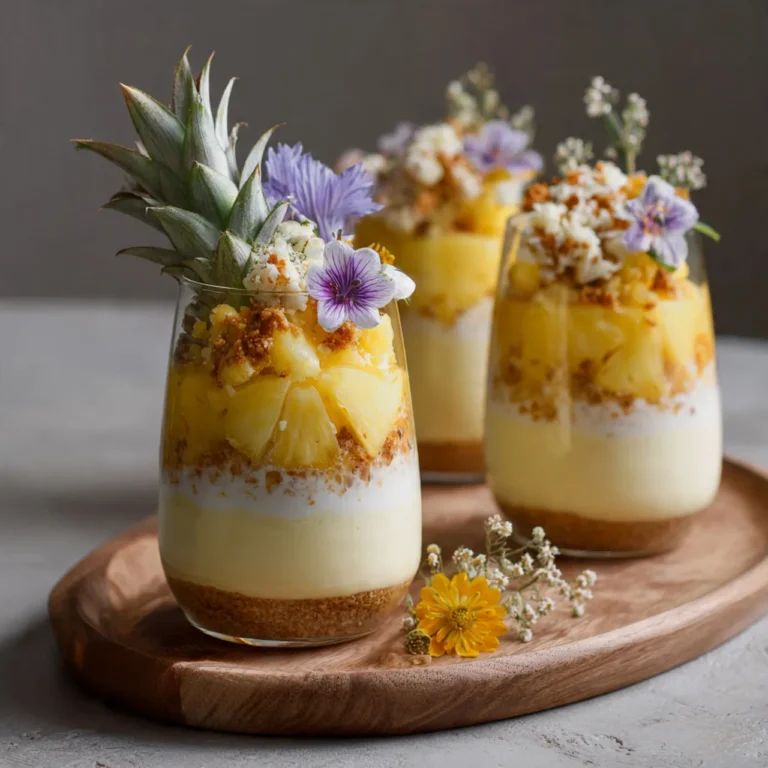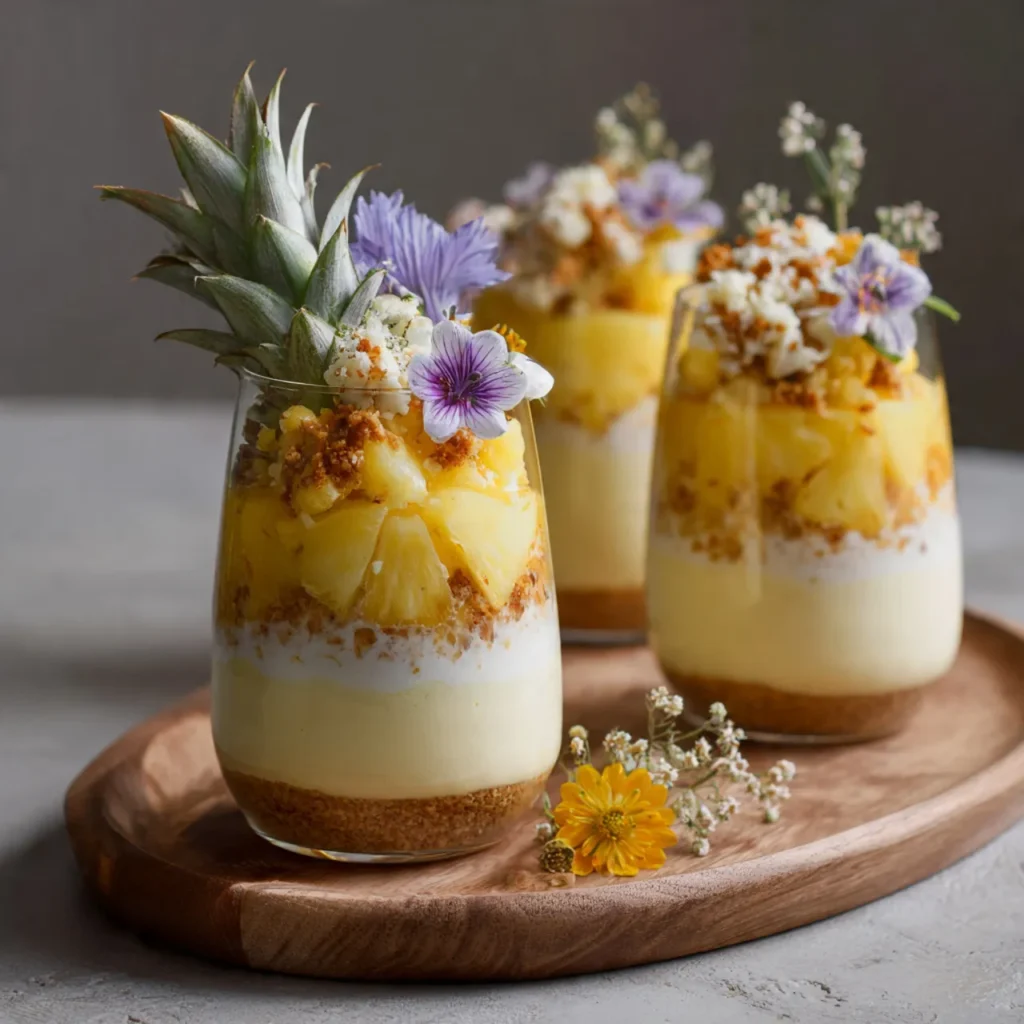
Exotic pineapple and coconut verrines are a tropical dream captured in a glass. These elegant layered desserts combine the sweetness of ripe pineapple with the creamy richness of coconut, creating a refreshing and indulgent treat. Each spoonful delivers a perfect balance of flavors and textures—smooth coconut mousse, tangy pineapple compote, and a hint of crunch from toasted coconut or biscuit crumbs. Served in individual glasses, these verrines are as visually stunning as they are delicious, making them ideal for summer gatherings, dinner parties, or any occasion that calls for a touch of tropical elegance.
The Essence of Tropical Verrines
Verrines are French desserts served in clear glasses, designed to showcase layers of contrasting textures and colors. The word “verrine” comes from “verre,” meaning glass, and it reflects the idea of transparency and artistry. Exotic pineapple and coconut verrines embody this concept beautifully, with their golden pineapple layers and creamy white coconut mousse creating a striking visual contrast. The combination of tropical flavors evokes the warmth of island life, offering a dessert that feels both luxurious and refreshing.
The Inspiration Behind the Dessert
The inspiration for pineapple and coconut verrines comes from the classic tropical pairing found in desserts like piña colada and coconut tarts. Pineapple brings brightness and acidity, while coconut adds smoothness and depth. Together, they create a dessert that’s both comforting and exotic. The verrine format elevates these familiar flavors into a refined presentation, allowing each layer to shine. The result is a dessert that captures the essence of the tropics—sunny, vibrant, and irresistibly creamy.
Choosing the Right Ingredients
The success of exotic pineapple and coconut verrines depends on the quality and freshness of the ingredients. Each component contributes to the overall harmony of the dessert.
Pineapple
Choose a ripe pineapple with golden skin and a sweet aroma. Fresh pineapple provides the best flavor and texture, but canned pineapple in juice (not syrup) can be used as a convenient alternative.
Coconut Milk or Cream
Full-fat coconut milk or coconut cream gives the mousse its rich, velvety texture. Light coconut milk can be used for a lighter version, but the flavor will be less intense.
Sweetener
Honey, agave syrup, or sugar can be used to enhance the natural sweetness of the fruit. Coconut sugar adds a caramel-like note that complements the tropical flavors.
Gelatin
Gelatin helps set the coconut mousse, giving it a smooth, airy consistency. Agar-agar can be used as a vegetarian alternative.
Lime Juice
A splash of lime juice brightens the pineapple compote and balances the sweetness.
Crunchy Element
Toasted coconut flakes, crushed biscuits, or granola add texture and contrast to the creamy layers.
Ingredients for Exotic Pineapple and Coconut Verrines
For the Pineapple Compote:
- 2 cups fresh pineapple, diced
- 2 tablespoons sugar or honey
- 1 tablespoon lime juice
- 1 teaspoon grated lime zest
- 1 teaspoon cornstarch mixed with 1 tablespoon water
the Coconut Mousse:
- 1 cup coconut milk or coconut cream
- 2 tablespoons sugar
- 1 teaspoon vanilla extract
- 1 teaspoon gelatin powder (or 1 gelatin leaf)
- ½ cup heavy cream, whipped
For the Crunchy Layer:
- ½ cup crushed biscuits or graham crackers
- 2 tablespoons melted butter
- 2 tablespoons toasted coconut flakes
Garnish:
- Fresh pineapple slices or cubes
- Toasted coconut flakes
- Mint leaves
Step-by-Step Preparation
1. Prepare the Pineapple Compote
In a saucepan, combine the diced pineapple, sugar, lime juice, and zest. Cook over medium heat for 10 minutes until the pineapple softens and releases its juices. Stir in the cornstarch mixture and cook for another 2 minutes until thickened. Remove from heat and let cool completely.
2. Prepare the Coconut Mousse
Bloom the gelatin by sprinkling it over 2 tablespoons of water and letting it sit for 5 minutes. In a small saucepan, heat the coconut milk, sugar, and vanilla until warm but not boiling. Remove from heat and stir in the gelatin until fully dissolved. Let cool to room temperature. Gently fold in the whipped cream until smooth and airy. Chill for 30 minutes before assembling.
3. Prepare the Crunchy Layer
Mix the crushed biscuits with melted butter and toasted coconut flakes. Press a small amount into the bottom of each glass to form a base. Chill for 15 minutes to set.
4. Assemble the Verrines
Spoon a layer of pineapple compote over the biscuit base. Add a layer of coconut mousse, smoothing the surface. Repeat the layers if desired, finishing with a glossy layer of mousse or compote. Refrigerate for at least 2 hours to allow the flavors to meld and the mousse to set.
5. Garnish and Serve
Before serving, top each verrine with fresh pineapple cubes, toasted coconut flakes, and mint leaves. Serve chilled.
The Science of Texture
The success of exotic pineapple and coconut verrines lies in the interplay of textures. The mousse provides creaminess and lightness, the compote adds juiciness and tang, and the crunchy base offers contrast. The gelatin in the mousse ensures a smooth, stable texture that holds its shape while remaining soft and airy. The layering not only enhances the visual appeal but also ensures that each spoonful delivers a balanced combination of flavors and sensations.
Variations and Add-Ins
Exotic pineapple and coconut verrines can be customized in countless ways.
- Piña Colada Verrines: Add a splash of rum or coconut rum to the pineapple compote for an adult twist.
- Mango Coconut Verrines: Replace half the pineapple with mango for a tropical blend.
- Pineapple Passion Fruit Verrines: Add passion fruit pulp for extra tanginess.
- Coconut Yogurt Verrines: Replace the mousse with coconut yogurt for a lighter version.
- Vegan Version: Use coconut cream and agar-agar instead of dairy and gelatin.
- Layered Verrines: Alternate layers of mousse, compote, and crushed biscuits for a more intricate presentation.
Serving Suggestions
Exotic pineapple and coconut verrines can be served in various elegant ways.
- Classic Presentation: Serve in clear glasses to showcase the layers.
- Mini Verrines: Use small shot glasses for bite-sized portions at parties.
- Tropical Dessert Bar: Arrange on a platter with other fruit-based desserts.
- Festive Dessert: Decorate with edible flowers or gold leaf for special occasions.
Tips for Perfect Verrines
- Use Ripe Pineapple: The natural sweetness of ripe fruit enhances the flavor.
- Chill Between Layers: Allow each layer to set before adding the next for clean separation.
- Balance Sweetness: Adjust sugar based on the tartness of the pineapple.
- Serve Cold: Verrines taste best when well chilled.
- Plan Ahead: Prepare the mousse and compote a day in advance for convenience.
The Role of Pineapple and Coconut in Flavor
Pineapple and coconut are a classic tropical pairing that balance each other beautifully. Pineapple’s acidity cuts through the richness of coconut, while coconut’s creaminess softens the pineapple’s tang. Together, they create a flavor profile that’s both vibrant and smooth, evoking the essence of island life. The combination is refreshing yet indulgent, making it ideal for warm-weather desserts.
Nutritional Information (per serving)
- Calories: 250 kcal
- Fat: 16 g
- Carbohydrates: 24 g
- Protein: 3 g
- Sugar: 20 g
Troubleshooting Common Issues
- Mousse Too Soft: Chill longer or use slightly more gelatin.
- Mousse Too Firm: Reduce the amount of gelatin for a softer texture.
- Layers Mixing: Ensure each layer is fully set before adding the next.
- Too Sweet: Add more lime juice to balance the flavors.
The Joy of Homemade Verrines
Making exotic pineapple and coconut verrines at home is a rewarding experience that combines artistry and flavor. The process of layering, chilling, and decorating transforms simple ingredients into a dessert that looks and tastes professional. The aroma of pineapple simmering with lime and the creamy texture of coconut mousse create a sensory experience that’s both comforting and luxurious. Homemade verrines allow for creativity—adjusting flavors, experimenting with textures, and presenting them beautifully for any occasion.
Pineapple and Coconut in Culinary Tradition
Pineapple and coconut are staples in tropical cuisines around the world. In Southeast Asia, they appear in desserts like sticky rice with coconut cream and pineapple tarts. In the Caribbean, they’re celebrated in drinks like piña coladas and tropical cakes. The combination of these two ingredients in a French-style verrine brings together global influences, blending tropical flavors with European elegance.
Sustainability and Ingredient Sourcing
Using fresh, locally sourced pineapple supports sustainable agriculture and ensures superior flavor. Choosing organic coconut milk and fair-trade sugar enhances both quality and ethics. Making verrines at home also reduces packaging waste, making it an environmentally conscious indulgence.
Modern Twists on a Classic
Chefs and home cooks have reimagined pineapple and coconut verrines in creative ways. Some add layers of sponge cake or crumble for texture, while others incorporate flavored gels or foams for a modern touch. The tropical combination remains timeless, but it can be elevated with innovative techniques like mirror glazes or tempered chocolate decorations.
Pairing with Desserts and Beverages
Exotic pineapple and coconut verrines pair beautifully with a variety of desserts and drinks.
- With Desserts: Serve alongside coconut macaroons or tropical fruit tarts.
- With Beverages: Pair with iced tea, sparkling water, or tropical cocktails.
- With Fruits: Complement with mango, kiwi, or passion fruit.
- With Spirits: Enjoy with rum, coconut liqueur, or prosecco for a festive pairing.
The Timeless Appeal
Exotic pineapple and coconut verrines remain timeless because they combine elegance with comfort. Their layered structure, vibrant color, and balanced flavors make them suitable for any occasion. The contrast between the tangy pineapple, creamy coconut, and crunchy base creates a dessert that’s both refreshing and indulgent. Whether served at a dinner party, a summer picnic, or a festive celebration, they bring beauty and joy to the table.
Presentation and Storage
For a professional presentation, serve the verrines in clear glasses to highlight the layers. Garnish with pineapple wedges, toasted coconut, or mint leaves. Store covered in the refrigerator for up to two days. The flavors deepen over time, making them even more delicious the next day.
The Joy of Sharing
Exotic pineapple and coconut verrines are desserts meant to be shared. Their cheerful colors and tropical flavors make them perfect for family gatherings, picnics, and summer parties. Sharing these handcrafted creations turns a simple dessert into a moment of connection, artistry, and delight.
Conclusion
Exotic pineapple and coconut verrines are a celebration of tropical flavor, texture, and elegance. With their layers of tangy pineapple compote, creamy coconut mousse, and crunchy base, they capture the essence of indulgence and freshness in one stunning dessert. Making them at home allows for creativity, precision, and personal expression. Whether served at a festive dinner, a romantic evening, or a summer gathering, these verrines remain a timeless favorite—a dessert that combines beauty, balance, and pure joy in every spoonful.