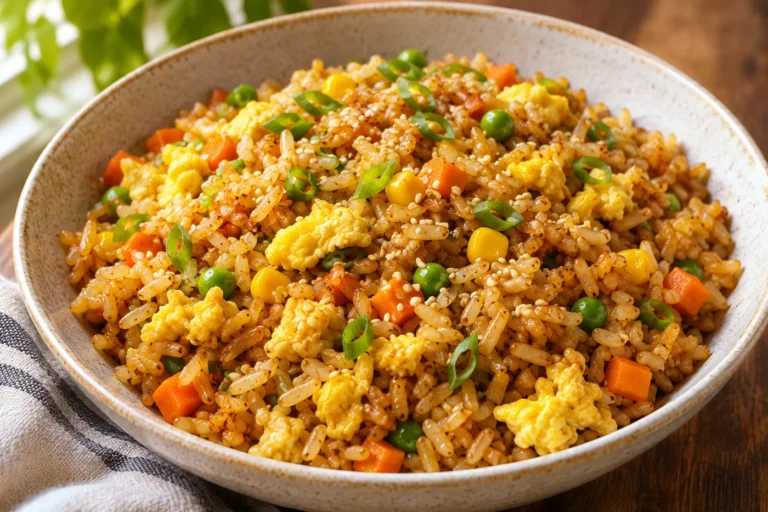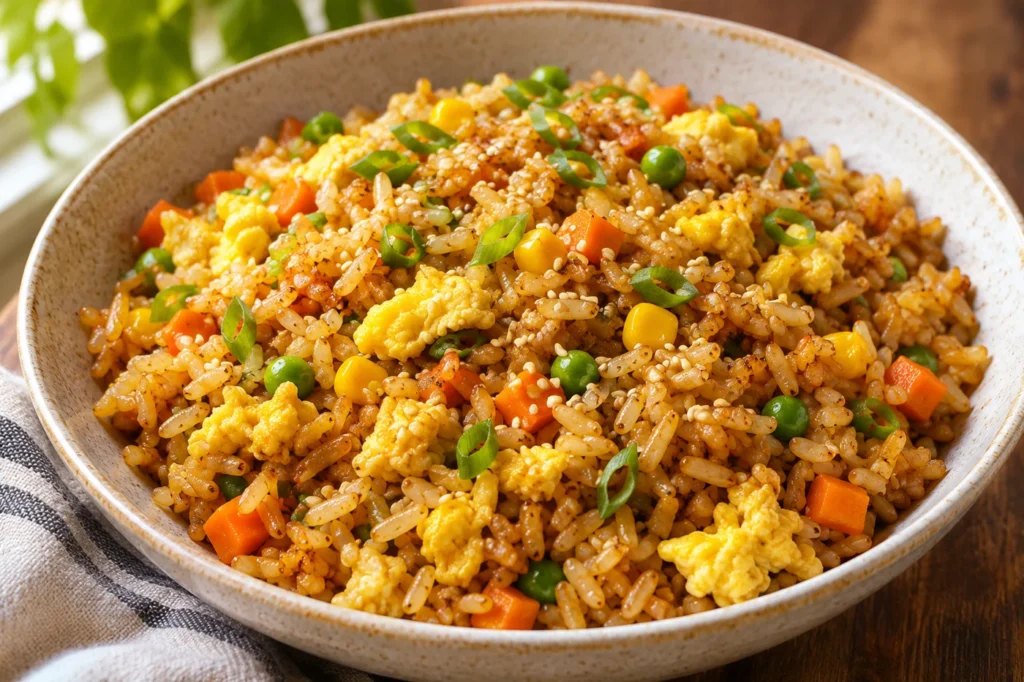
Soy sesame egg fried rice is built around things you can keep ready in the refrigerator and freezer. Cooked rice that has cooled and been refrigerated separates easily in a hot skillet. Frozen mixed vegetables add color with no chopping, and eggs turn the pan into dinner. Keep the seasoning simple, with soy sauce added around the edge and sesame oil stirred in just before serving. This recipe makes two generous portions in about fifteen minutes if the rice is already cooked. A wide skillet is more important than a wok because it gives the grains room to warm and dry.
Ingredients
- 3 cups cooked chilled rice, stored safely in the refrigerator
- 2 large eggs
- 1½ cups frozen mixed peas, carrots, and corn
- 2 tablespoons neutral cooking oil, divided
- 2 scallions, thinly sliced, whites and greens separated
- 2 tablespoons reduced-sodium soy sauce, plus more to taste
- 1 teaspoon toasted sesame oil
- Black pepper to taste
- Chili crisp or toasted sesame seeds, optional
How to cook egg fried rice
Get everything beside the stove
Break up cold rice with clean fingers or the back of a spoon. Large clumps need too much stirring once the skillet is hot. Beat the eggs in a bowl. Set the vegetables, scallions, sauces and oil within reach. If the frozen vegetables have large chunks, use a mixture cut into small pieces so everything warms at the same rate. Keep the scallion greens for the end.
Scramble the eggs and heat the vegetables
Warm a large skillet over medium-high heat with half the oil. Pour in the eggs and stir until set, breaking them into small pieces. Transfer them to a clean plate. Add the scallion whites and frozen vegetables to the skillet. Stir and cook until the vegetables are hot throughout and you no longer see water pooling under them. If a lot of liquid collects, let it steam away before adding the rice. The grains will stay separate more easily if they meet a relatively dry pan.
Fry the rice and finish
Add the remaining oil and spread the rice out. Let it sit briefly against the hot skillet, then lift and turn it with a spatula. Continue until it is steaming throughout. Stir in the cooked eggs. Drizzle the soy sauce around the edge, toss quickly and taste. Turn off the heat and add sesame oil, pepper and scallion greens. Serve immediately with any optional toppings.
How to keep the grains separate
Cold rice usually works well because it feels drier and firmer than freshly cooked rice. Break the clumps before they go in. A crowded skillet cools more quickly, so use two batches if you double the recipe. If using freshly cooked rice, spread it on a clean tray briefly to release steam and fry it right away. A little sticking is normal. Give the grains a moment to toast before scraping them up rather than stirring constantly from the start.
Why sesame oil goes in last
Toasted sesame oil has a concentrated aroma and is used here as a finishing seasoning. Neutral oil handles the heat at the beginning. Taste before doubling the sesame oil, since a little can dominate the egg and scallion. Low-sodium soy sauce gives you more control, but the amount still depends on the brand. Use less soy sauce at first if you plan to add chili crisp, which may already be salty.
Make it with what you have
Diced bell pepper or finely chopped cabbage can replace part of the frozen mixture. Cook them with the scallion whites. Add leftover fully cooked vegetables near the end if they are already tender. Use diced cooked chicken or tofu for a more substantial skillet, warming it thoroughly before serving. Fresh grated ginger or a little minced garlic can go in just before the vegetables. Keep the aromatics moving so they do not burn against the hot surface.
Serve and handle leftovers
Serve the rice as soon as it is hot, with chili crisp on the side for anyone who wants heat. If you are using refrigerated rice, heat only the amount you plan to eat and serve it right away. Avoid using rice that has been left at room temperature for an extended period. If there is no cooked rice ready, freshly prepared microwave rice is a practical choice. Break it up before adding it and avoid packages with a strong seasoning that clashes with soy sauce.
A lunch-size variation
Cut the recipe in half and use one egg for a single portion. Keep the skillet broad enough to leave open patches between the grains. If the portion heats quickly, take the pan off the burner before stirring in the sesame oil and greens.
If the scallions are especially sharp, reserve only a little of the green part and serve the rest separately. Before adding soy sauce, stir the skillet so you can see whether any pale clumps still need breaking up. The sauce spreads more easily when the grains are separate.