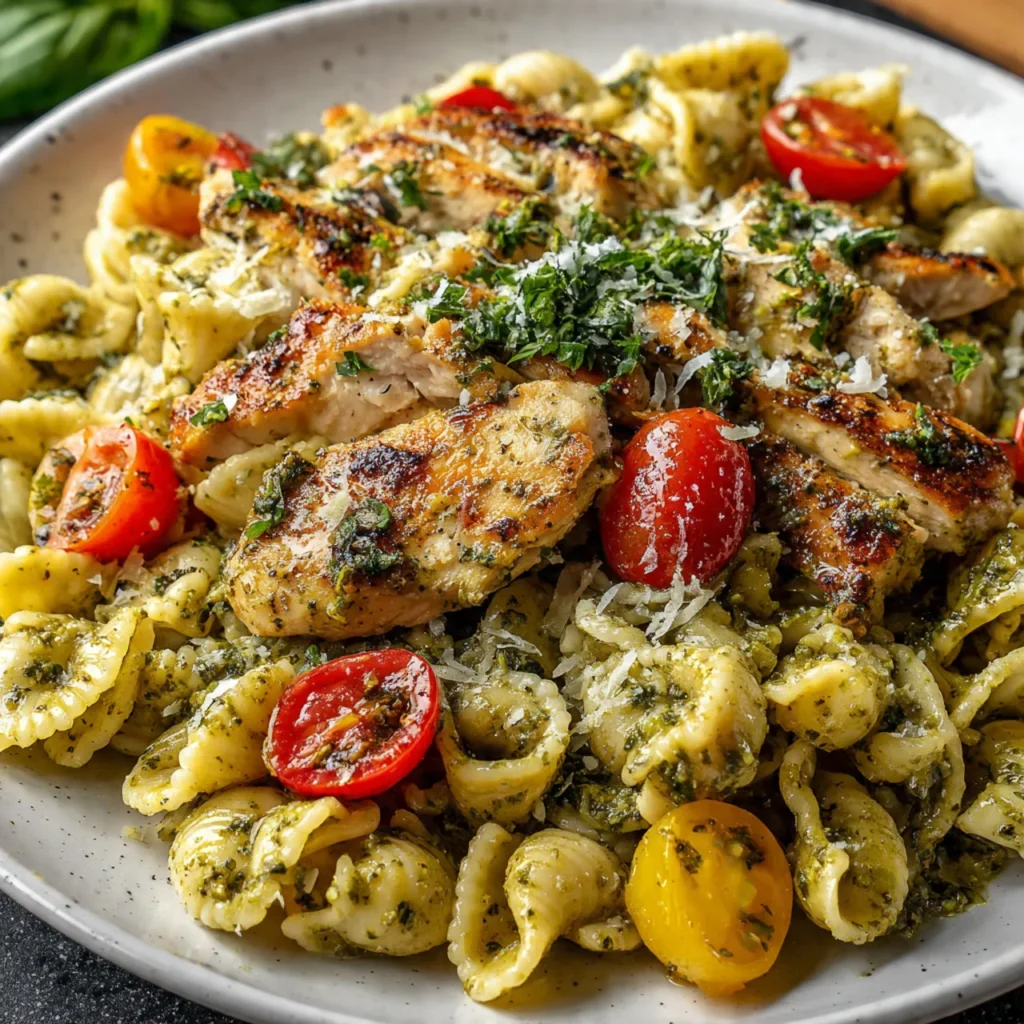
Chicken Pesto Pasta is a timeless dish that combines the aromatic freshness of basil pesto with tender pieces of chicken and perfectly cooked pasta. It’s a meal that feels both comforting and sophisticated, ideal for busy weeknights or casual gatherings. The vibrant green pesto sauce, made from fresh basil, garlic, pine nuts, Parmesan, and olive oil, coats every strand of pasta, while the chicken adds satisfying protein and heartiness. This dish captures the essence of Italian cooking—simple ingredients, bold flavors, and effortless elegance.
The Origins of Pesto and Its Perfect Pairing with Pasta
Pesto originated in Genoa, Italy, and its name comes from the Italian word “pestare,” meaning “to crush.” Traditionally, pesto is made by crushing fresh basil leaves, garlic, pine nuts, Parmesan cheese, and olive oil using a mortar and pestle. The result is a fragrant, vibrant green sauce that’s both earthy and refreshing. When paired with pasta, pesto creates a silky coating that enhances the texture and flavor of the noodles. Adding chicken to the mix transforms the dish into a complete meal, balancing the richness of the sauce with lean protein.
Ingredients for Chicken Pesto Pasta
For the Chicken:
- 1 ½ pounds boneless, skinless chicken breasts or thighs
- 1 tablespoon olive oil
- Salt and black pepper to taste
- ½ teaspoon garlic powder
- ½ teaspoon Italian seasoning
For the Pasta:
- 12 ounces pasta (penne, fusilli, or spaghetti)
- Salt for boiling water
the Pesto Sauce:
- 2 cups fresh basil leaves, packed
- 2 cloves garlic
- ¼ cup pine nuts (or walnuts for a budget-friendly option)
- ½ cup grated Parmesan cheese
- ½ cup extra-virgin olive oil
- Juice of ½ lemon
- Salt and pepper to taste
Optional Add-Ins:
- ½ cup cherry tomatoes, halved
- ¼ cup sun-dried tomatoes, chopped
- ¼ cup heavy cream or cream cheese for a creamy version
- Extra Parmesan and basil for garnish
Step-by-Step Instructions
Step 1: Cook the Pasta
Bring a large pot of salted water to a boil. Add the pasta and cook according to package instructions until al dente. Reserve ½ cup of pasta water before draining. This starchy water helps the sauce cling to the pasta later.
Step 2: Cook the Chicken
While the pasta cooks, heat olive oil in a large skillet over medium-high heat. Season the chicken with salt, pepper, garlic powder, and Italian seasoning. Cook for 5–6 minutes per side, or until golden brown and cooked through. Remove from the skillet and let rest for a few minutes before slicing into strips or cubes.
Step 3: Make the Pesto
In a food processor, combine basil, garlic, pine nuts, and Parmesan. Pulse until finely chopped. With the motor running, slowly drizzle in olive oil until the mixture becomes smooth and creamy. Add lemon juice, salt, and pepper to taste. Adjust consistency by adding a bit more olive oil if needed.
Step 4: Combine Everything
Return the cooked pasta to the skillet over low heat. Add the pesto sauce and a splash of reserved pasta water. Toss until the pasta is evenly coated. Add the sliced chicken and toss again to combine. If making a creamy version, stir in heavy cream or cream cheese at this stage.
Step 5: Serve and Garnish
Serve the Chicken Pesto Pasta warm, topped with extra Parmesan cheese, fresh basil leaves, and a drizzle of olive oil. For added color and flavor, scatter cherry tomatoes or sun-dried tomatoes on top.
Flavor Profile and Texture
Chicken Pesto Pasta offers a perfect balance of flavors—herbaceous, nutty, garlicky, and slightly tangy from the lemon. The pesto’s freshness contrasts beautifully with the savory chicken and the richness of Parmesan. The texture is creamy yet light, with the pasta absorbing the sauce’s vibrant green hue. Each bite delivers a burst of basil aroma and a satisfying combination of tender chicken and al dente pasta.
Variations and Customizations
This dish is endlessly adaptable, allowing for creative twists while maintaining its core appeal.
1. Creamy Chicken Pesto Pasta: Add ¼ cup of heavy cream or cream cheese to the sauce for a richer, velvety texture.
2. Pesto Chicken Pasta with Vegetables: Add sautéed zucchini, spinach, or roasted bell peppers for extra nutrition and color.
3. Spicy Pesto Pasta: Stir in a pinch of red pepper flakes or a spoonful of chili oil for a subtle kick.
4. Dairy-Free Version: Use nutritional yeast instead of Parmesan and omit cream for a vegan-friendly option.
5. Pesto Chicken Pasta Salad: Serve the dish cold with cherry tomatoes, mozzarella balls, and arugula for a refreshing summer meal.
6. Baked Pesto Pasta: Mix the pasta with pesto and chicken, top with mozzarella, and bake until bubbly for a comforting casserole-style dish.
Perfect Side Dishes
Chicken Pesto Pasta pairs beautifully with light sides that complement its bold flavors.
1. Garlic Bread: Crispy, buttery garlic bread is perfect for soaking up extra pesto sauce.
2. Caprese Salad: Fresh mozzarella, tomatoes, and basil drizzled with balsamic glaze echo the flavors of the pasta.
3. Roasted Vegetables: A mix of roasted zucchini, cherry tomatoes, and bell peppers adds color and texture.
4. Caesar Salad: The creamy dressing and crisp lettuce balance the richness of the pasta.
5. White Wine: A chilled Sauvignon Blanc or Pinot Grigio enhances the basil and garlic notes.
Nutritional Information
A typical serving of Chicken Pesto Pasta (about 1 ½ cups) provides approximately:
- Calories: 520
- Protein: 35g
- Fat: 22g
- Carbohydrates: 45g
- Fiber: 3g
- Sodium: 480mg
This dish offers a balanced combination of protein, healthy fats, and carbohydrates, making it both satisfying and energizing. Using whole-grain pasta or zucchini noodles can increase fiber and reduce calories.
Tips for Success
1. Use Fresh Basil: Fresh basil leaves are essential for authentic pesto flavor. Avoid wilted or discolored leaves.
2. Toast the Nuts: Lightly toasting pine nuts or walnuts enhances their nutty aroma and depth.
3. Don’t Overheat the Pesto: Pesto loses its vibrant color and flavor when overheated. Toss it with warm pasta off the heat.
4. Reserve Pasta Water: The starchy water helps emulsify the sauce, creating a silky coating.
5. Balance the Flavors: Adjust lemon juice, salt, and Parmesan to achieve the perfect balance of brightness and richness.
Meal Prep and Storage
Chicken Pesto Pasta is excellent for meal prep and can be enjoyed hot or cold.
To Store: Place leftovers in an airtight container and refrigerate for up to 4 days.
To Reheat: Warm gently in a skillet over low heat, adding a splash of water or olive oil to loosen the sauce. Avoid microwaving for too long to preserve the pesto’s freshness.
To Freeze: Freeze cooked chicken and pesto separately for up to 3 months. Thaw overnight in the refrigerator before combining with freshly cooked pasta.
Serving Ideas
Chicken Pesto Pasta can be served in various creative ways beyond the traditional bowl.
1. Pesto Chicken Wraps: Use leftover pasta and chicken as a filling for wraps with spinach and mozzarella.
2. Pesto Chicken Flatbread: Spread pesto pasta over flatbread, top with cheese, and bake for a quick pizza-style meal.
3. Pesto Chicken Stuffed Peppers: Fill halved bell peppers with pasta and bake until tender.
4. Pesto Chicken Grain Bowl: Combine with quinoa, roasted vegetables, and extra pesto for a hearty lunch bowl.
5. Pesto Chicken Skillet Bake: Mix pasta, chicken, and pesto in a skillet, top with mozzarella, and broil until golden.
The Science Behind Pesto’s Flavor
Pesto’s irresistible flavor comes from the synergy of its ingredients. Basil provides aromatic freshness, garlic adds pungency, and Parmesan contributes umami depth. Pine nuts lend creaminess, while olive oil binds everything together. The lemon juice brightens the sauce, preventing it from tasting heavy. When combined with pasta, the starch helps the sauce cling, creating a cohesive, flavorful coating. The chicken’s mild flavor complements the pesto without overpowering it, resulting in a balanced dish that’s both rich and refreshing.
Why Chicken Pesto Pasta Is a Weeknight Favorite
This dish has become a staple in many households because it’s quick, versatile, and universally loved. It requires minimal ingredients, most of which are pantry staples, and can be prepared in under 30 minutes. The combination of protein, carbs, and healthy fats makes it a complete meal that satisfies hunger without feeling heavy. It’s also easy to scale up for family dinners or gatherings, and leftovers taste just as good the next day.
Common Mistakes to Avoid
1. Using Store-Bought Pesto Without Adjusting Flavor: If using jarred pesto, add a squeeze of lemon juice and extra Parmesan to refresh the flavor.
2. Overcooking the Pasta: Al dente pasta holds its shape and texture better when tossed with sauce.
3. Skipping the Resting Step for Chicken: Letting the chicken rest ensures juiciness and prevents dryness.
4. Adding Pesto to Hot Pan: Always remove the pan from heat before adding pesto to preserve its color and flavor.
5. Neglecting Seasoning: Taste and adjust salt, pepper, and lemon juice before serving for a balanced finish.
A Dish That Embodies Simplicity and Flavor
Chicken Pesto Pasta is a celebration of simplicity done right. It showcases how a few high-quality ingredients can create a dish bursting with flavor and freshness. The vibrant green pesto, tender chicken, and perfectly cooked pasta come together in harmony, offering a meal that’s both comforting and elegant. It’s a dish that appeals to all ages and occasions, from quick weeknight dinners to weekend gatherings.
Conclusion
Chicken Pesto Pasta is more than just a quick meal—it’s a culinary experience that captures the heart of Italian cooking. With its fragrant basil pesto, juicy chicken, and satisfying pasta, it delivers freshness, comfort, and flavor in every bite. Whether served warm or cold, creamy or classic, this dish remains a timeless favorite that never fails to impress. Its balance of simplicity and sophistication makes it a must-have recipe for any kitchen, proving that great food doesn’t need to be complicated to be extraordinary.