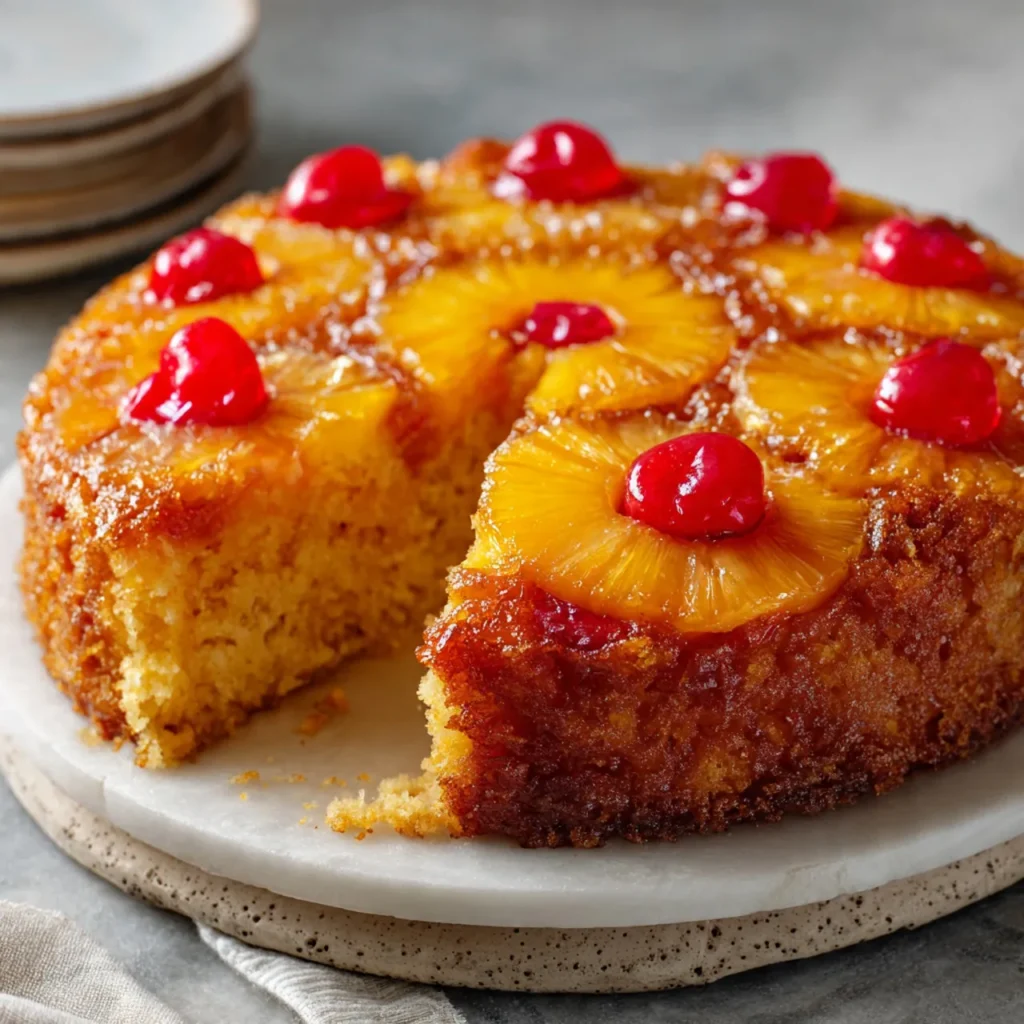
Pineapple upside-down cake is a dessert that perfectly blends nostalgia, flavor, and visual appeal. With its glossy caramelized pineapple rings, bright red cherries, and buttery golden cake, it’s a showstopper that has stood the test of time. Each bite offers a balance of sweet, tangy fruit and rich, moist cake, creating a dessert that’s both comforting and elegant. Whether served warm from the oven or chilled the next day, pineapple upside-down cake captures the essence of classic home baking—simple, beautiful, and irresistibly delicious.
The Essence of Pineapple Upside-Down Cake
The magic of pineapple upside-down cake lies in its presentation and flavor. The cake is baked with pineapple slices and cherries arranged at the bottom of the pan, coated in a buttery brown sugar glaze. When inverted after baking, the fruit becomes the star of the show, glistening with caramelized syrup. The cake beneath absorbs the juices, becoming moist and flavorful. The combination of tropical fruit, caramel, and buttery cake creates a dessert that’s both rich and refreshing, making it a favorite for generations.
The Origins of the Dessert
The origins of pineapple upside-down cake date back to the early 20th century, when canned pineapple became widely available. The concept of “upside-down” cakes—where fruit is baked at the bottom and flipped after baking—was already popular with apples and other fruits. The introduction of canned pineapple by the Dole company in the 1920s inspired home bakers to create a tropical version, often decorated with maraschino cherries for color. The dessert quickly became a symbol of mid-century American baking, celebrated for its beauty, simplicity, and flavor. Today, it remains a beloved classic that evokes both nostalgia and timeless appeal.
The Role of Each Component
The Pineapple
Pineapple provides the signature flavor and visual appeal. Its natural acidity balances the sweetness of the caramel and cake, while its texture contrasts beautifully with the soft crumb.
The Caramel Glaze
A mixture of butter and brown sugar forms the base layer, which caramelizes during baking. This glaze seeps into the cake, adding moisture and a rich, buttery sweetness.
The Cherries
Maraschino cherries add a pop of color and a hint of sweetness, making the cake visually striking.
The Cake Batter
The cake itself is buttery, tender, and slightly dense, designed to absorb the pineapple juices without becoming soggy. A hint of vanilla or rum enhances the tropical flavor.
Choosing the Right Ingredients
Pineapple
Use canned pineapple rings for convenience and uniformity. Fresh pineapple can be used, but it should be sliced thinly and cooked briefly to soften.
Cherries
Maraschino cherries are traditional, but fresh or candied cherries can be used for a more natural flavor.
Sugar
Brown sugar gives the caramel its deep flavor and color. Light brown sugar creates a milder sweetness, while dark brown sugar adds richness.
Butter
Unsalted butter provides the base for the caramel and adds richness to the cake.
Flour
All-purpose flour gives the cake structure while keeping it tender.
Eggs
Eggs add moisture and help the cake rise.
Milk or Buttermilk
Milk creates a soft crumb, while buttermilk adds a slight tang that complements the pineapple.
Flavorings
Vanilla extract enhances the sweetness, while a splash of rum or pineapple juice deepens the tropical flavor.
Ingredients for 8–10 Servings
For the Topping
- 60 g (¼ cup) unsalted butter
- 100 g (½ cup) brown sugar
- 7–8 pineapple rings (canned or fresh)
- 7–8 maraschino cherries
For the Cake Batter
- 180 g (1½ cups) all-purpose flour
- 2 teaspoons baking powder
- ¼ teaspoon salt
- 115 g (½ cup) unsalted butter, softened
- 150 g (¾ cup) granulated sugar
- 2 large eggs
- 1 teaspoon vanilla extract
- 120 ml (½ cup) milk or buttermilk
- 2 tablespoons pineapple juice or rum (optional)
Preparing the Topping
- Preheat the oven: Set the oven to 180°C (350°F).
- Make the caramel: In a small saucepan, melt the butter over medium heat. Add the brown sugar and stir until dissolved and smooth.
- Pour into pan: Pour the caramel mixture into a 23 cm (9-inch) round cake pan, spreading it evenly.
- Arrange the fruit: Place pineapple rings over the caramel, slightly overlapping if necessary. Place a cherry in the center of each ring.
Preparing the Cake Batter
- Mix dry ingredients: In a bowl, whisk together flour, baking powder, and salt.
- Cream butter and sugar: In a separate bowl, beat the butter and sugar until light and fluffy.
- Add eggs and flavoring: Beat in the eggs one at a time, then add vanilla extract and pineapple juice or rum.
- Combine wet and dry: Add the dry ingredients alternately with milk, beginning and ending with flour. Mix until just combined.
- Pour over fruit: Spoon the batter over the pineapple layer and spread evenly.
Baking the Cake
- Bake: Place the pan in the preheated oven and bake for 35–40 minutes, or until a toothpick inserted in the center comes out clean.
- Cool briefly: Let the cake cool in the pan for 10 minutes.
- Invert: Run a knife around the edges, place a serving plate over the pan, and carefully invert the cake. Lift off the pan to reveal the caramelized fruit topping.
- Cool completely: Allow the cake to cool before slicing.
The Perfect Texture and Flavor
The perfect pineapple upside-down cake has a moist, tender crumb infused with the flavor of caramelized pineapple. The topping should be glossy and golden, with the pineapple slightly caramelized and the cherries adding a bright contrast. The cake should be rich but not heavy, with a buttery sweetness balanced by the tang of the fruit. Each bite should offer a combination of soft cake, juicy pineapple, and sticky caramel—a harmony of textures and flavors that’s both nostalgic and satisfying.
Variations and Add-Ins
- With coconut: Add shredded coconut to the batter for a tropical twist.
- With nuts: Sprinkle chopped pecans or walnuts over the caramel before adding the fruit.
- With spices: Add cinnamon or ginger to the batter for warmth.
- With fresh pineapple: Use fresh pineapple slices for a brighter flavor.
- With rum glaze: Brush the warm cake with a rum syrup for extra richness.
- Mini versions: Make individual cakes in muffin tins for personal servings.
Tips for Success
- Use the right pan: A heavy, non-stick pan ensures even caramelization.
- Don’t overmix: Overmixing the batter can make the cake dense.
- Invert while warm: The caramel sets quickly, so invert the cake after 10 minutes.
- Drain the pineapple: Excess liquid can make the topping soggy.
- Cool before slicing: This allows the caramel to set and the flavors to develop.
- Serve warm: The cake tastes best slightly warm, when the caramel is soft and glossy.
Presentation Ideas
- Classic style: Serve slices with a dollop of whipped cream.
- Elegant look: Garnish with mint leaves or a drizzle of caramel sauce.
- Rustic charm: Serve directly from the pan for a homely presentation.
- Festive version: Add a sprinkle of toasted coconut or powdered sugar.
- Modern plating: Serve with a scoop of vanilla ice cream and a drizzle of pineapple syrup.
Pairing Suggestions
The sweet, tropical flavors of pineapple upside-down cake pair beautifully with a variety of beverages:
- Tea: Earl Grey or chamomile complements the caramel notes.
- Coffee: A cappuccino or espresso balances the sweetness.
- Wine: A sweet Riesling or Moscato enhances the fruitiness.
- Non-alcoholic: Serve with pineapple juice or coconut water for a tropical pairing.
Nutritional Information (per serving)
- Calories: 360 kcal
- Protein: 4 g
- Fat: 15 g
- Carbohydrates: 55 g
- Fiber: 1 g
Storing and Serving
Pineapple upside-down cake can be stored at room temperature for up to 2 days or refrigerated for up to 5 days. Cover tightly with plastic wrap or foil to prevent drying. To reheat, warm slices in the microwave for 15–20 seconds or in a 160°C (325°F) oven for 10 minutes. The cake can also be frozen for up to 2 months; thaw overnight in the refrigerator before serving.
The Flavor Experience
Every bite of pineapple upside-down cake is a journey through layers of flavor and texture. The caramelized pineapple provides a sweet, tangy burst, while the cherries add a hint of brightness. The cake itself is buttery and moist, infused with the juices of the fruit and the richness of caramel. The aroma of baked pineapple and brown sugar fills the air, evoking memories of classic home baking. The combination of warm fruit and soft cake creates a dessert that’s both comforting and elegant, simple yet deeply satisfying.
Making It for Special Occasions
Pineapple upside-down cake is perfect for celebrations, from family gatherings to festive holidays. Its vibrant appearance and nostalgic flavor make it a centerpiece-worthy dessert. For special occasions, decorate with fresh pineapple slices, candied cherries, or a drizzle of rum glaze. It’s also ideal for summer parties, where its tropical flavor and golden color capture the spirit of the season. Whether served at a casual brunch or a formal dinner, it’s a dessert that brings warmth and joy to any table.
Common Mistakes to Avoid
- Overbaking: The cake can become dry if baked too long.
- Using too much liquid: Excess pineapple juice can make the topping soggy.
- Not inverting soon enough: The caramel can harden and stick to the pan.
- Skipping the cooling time: The cake may fall apart if inverted too early.
- Uneven layering: Arrange the fruit evenly for a beautiful presentation.
A Dessert for Every Season
While pineapple upside-down cake is often associated with summer, its comforting sweetness makes it perfect year-round. In winter, it brings a taste of the tropics to cold days; in spring, it pairs beautifully with fresh fruit; and in autumn, it complements spiced beverages and warm gatherings. Its timeless appeal and versatility make it a dessert that transcends seasons, always bringing a touch of sunshine to the table.
The Joy of Homemade Baking
Making pineapple upside-down cake at home is a rewarding experience that combines simplicity and artistry. The process—melting butter and sugar, arranging fruit, and flipping the finished cake—is both nostalgic and satisfying. The aroma of caramel and pineapple fills the kitchen, and the moment of inversion reveals a dessert that’s as beautiful as it is delicious. It’s a reminder that homemade baking is about more than just ingredients—it’s about creativity, care, and the joy of sharing something made with love.
Conclusion
Pineapple upside-down cake is a timeless dessert that embodies the perfect balance of flavor, texture, and nostalgia. With its caramelized pineapple topping, buttery cake, and golden glow, it’s a dessert that delights both the eyes and the palate. Each bite offers a harmony of sweetness and tang, softness and richness, simplicity and elegance. Whether served warm with ice cream or enjoyed as a classic teatime treat, pineapple upside-down cake captures the essence of comfort and celebration. It’s more than just a dessert—it’s a piece of baking history, a symbol of home, and a reminder that the simplest recipes often bring the greatest joy.