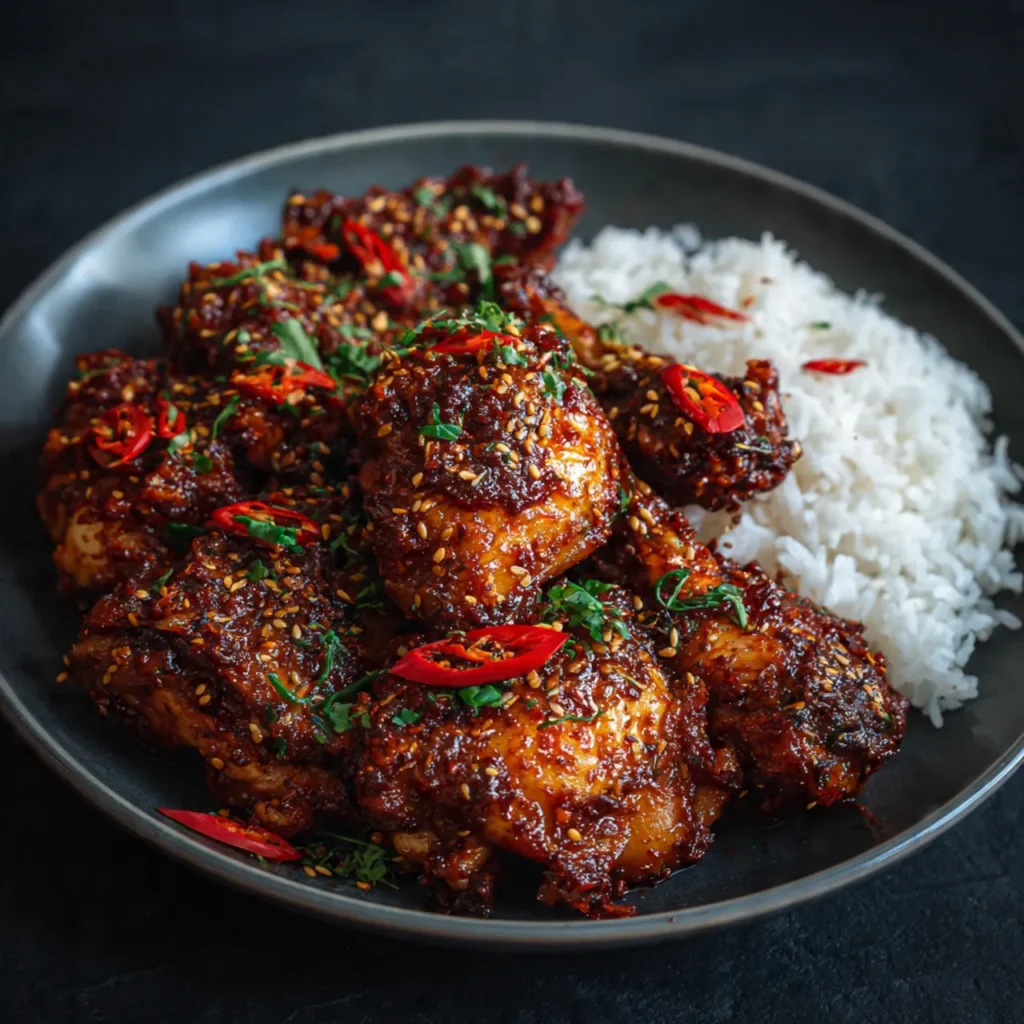
Spicy Korean Gochujang Chicken is a bold, flavorful dish that perfectly balances heat, sweetness, and smokiness. Made with tender chicken pieces coated in a rich gochujang sauce, this recipe captures the essence of Korean cuisine—vibrant, spicy, and deeply satisfying. The combination of chili paste, garlic, soy sauce, and honey creates a sauce that clings beautifully to the chicken, delivering a burst of flavor in every bite. Whether served over rice, noodles, or lettuce wraps, this dish is a guaranteed crowd-pleaser that brings restaurant-quality Korean flavor to the home kitchen.
The Allure of Gochujang
Gochujang, a staple in Korean cooking, is a fermented chili paste made from red chili powder, glutinous rice, fermented soybeans, and salt. It’s known for its unique balance of spicy, sweet, and umami flavors. Unlike other chili pastes, gochujang has a deep, complex taste that develops through fermentation, giving dishes a rich, savory depth. When combined with garlic, soy sauce, and a touch of sweetness, it transforms simple chicken into a flavorful masterpiece.
Ingredients for the Perfect Spicy Korean Gochujang Chicken
For the Chicken:
- 2 pounds boneless, skinless chicken thighs (or breasts), cut into bite-sized pieces
- 2 tablespoons vegetable oil
- 1 tablespoon cornstarch (optional, for crispier texture)
- Salt and pepper to taste
For the Gochujang Sauce:
- 3 tablespoons gochujang (Korean red chili paste)
- 2 tablespoons soy sauce
- 1 tablespoon rice vinegar
- 2 tablespoons honey or brown sugar
- 1 tablespoon sesame oil
- 3 cloves garlic, minced
- 1 teaspoon grated ginger
- 1 tablespoon gochugaru (Korean red chili flakes, optional for extra heat)
- 2 tablespoons water
Garnish:
- 1 tablespoon toasted sesame seeds
- 2 green onions, thinly sliced
Serving:
- Steamed white rice or jasmine rice
- Steamed vegetables or kimchi
- Lettuce leaves for wraps (optional)
Step-by-Step Instructions
Step 1: Preparing the Chicken
Pat the chicken dry with paper towels and season lightly with salt and pepper. If a crispier texture is desired, toss the chicken pieces in cornstarch before cooking. This helps create a light crust that holds the sauce beautifully.
Step 2: Making the Gochujang Sauce
In a small bowl, whisk together gochujang, soy sauce, rice vinegar, honey, sesame oil, garlic, ginger, gochugaru, and water until smooth. Adjust the sweetness or heat to taste—add more honey for sweetness or more gochujang for spice. Set aside.
Step 3: Cooking the Chicken
Heat the vegetable oil in a large skillet or wok over medium-high heat. Add the chicken pieces in a single layer and cook for 5–6 minutes, stirring occasionally, until golden brown and cooked through. Remove the chicken from the pan and set aside.
Step 4: Simmering the Sauce
In the same pan, pour in the prepared gochujang sauce. Bring it to a gentle simmer over medium heat, stirring constantly. Let it cook for 2–3 minutes until slightly thickened and glossy.
Step 5: Coating the Chicken
Return the cooked chicken to the pan and toss to coat evenly in the sauce. Cook for another 2–3 minutes, allowing the chicken to absorb the flavors and the sauce to cling perfectly.
Step 6: Serving
Transfer the chicken to a serving dish and sprinkle with toasted sesame seeds and sliced green onions. Serve hot over steamed rice, with vegetables, or wrapped in lettuce leaves for a lighter option.
Tips for the Best Spicy Korean Gochujang Chicken
- Use chicken thighs: They stay juicier and more flavorful than breasts.
- Adjust the heat: Add more or less gochujang or gochugaru depending on spice preference.
- Balance the flavors: Gochujang is spicy and savory—sweetness from honey or sugar balances it perfectly.
- Don’t overcook the sauce: Simmer just until thickened to keep it glossy and smooth.
- Add vegetables: Bell peppers, onions, or carrots add color and texture.
- Serve immediately: The sauce thickens as it cools, so serve hot for the best texture.
Variations of Spicy Korean Gochujang Chicken
1. Gochujang Chicken Stir-Fry
Add sliced bell peppers, onions, and zucchini for a colorful, veggie-packed stir-fry.
2. Crispy Gochujang Chicken
Coat the chicken in cornstarch and shallow-fry before tossing in the sauce for extra crunch.
3. Gochujang Chicken Wings
Use the same sauce to glaze baked or fried chicken wings for a spicy appetizer.
4. Honey Gochujang Chicken
Increase the honey for a sweeter, sticky glaze that’s perfect for kids or milder palates.
5. Gochujang Chicken Rice Bowls
Serve the chicken over rice with sautéed spinach, kimchi, and a fried egg for a Korean-inspired bowl.
6. Gochujang Chicken Lettuce Wraps
Serve the chicken in crisp lettuce leaves with shredded carrots and cucumbers for a light, low-carb meal.
The Science Behind Gochujang’s Flavor
Gochujang’s unique flavor comes from fermentation, which develops umami and complexity. The chili peppers provide heat, while the glutinous rice adds subtle sweetness. The fermentation process breaks down proteins into amino acids, enhancing the savory depth. When heated, the sugars in gochujang caramelize, creating a smoky, slightly sweet flavor that pairs perfectly with chicken. The combination of spicy, sweet, and umami elements makes gochujang one of the most versatile condiments in Korean cuisine.
Storing and Reheating
Store leftover chicken in an airtight container in the refrigerator for up to 4 days. To reheat, warm in a skillet over medium heat with a splash of water to loosen the sauce. Avoid microwaving for too long, as it can dry out the chicken. The dish can also be frozen for up to 2 months—thaw overnight in the refrigerator before reheating.
Pairing Suggestions
Spicy Korean Gochujang Chicken pairs beautifully with steamed rice, kimchi, or pickled vegetables. For a complete meal, serve with sautéed spinach, bean sprouts, or a simple cucumber salad. For beverages, try cold barley tea, sparkling water with lemon, or a light beer to balance the heat.
The Perfect Occasion for Gochujang Chicken
This dish is perfect for weeknight dinners, meal prep, or casual gatherings. It’s quick to make, full of flavor, and pairs well with a variety of sides. Its bold, spicy flavor makes it ideal for those who love adventurous, vibrant meals. Whether served as a main course or part of a Korean-inspired feast, it always impresses.
Troubleshooting Common Issues
- Too spicy: Add more honey or a splash of coconut milk to mellow the heat.
- Too thick: Add a tablespoon of water or broth to thin the sauce.
- Too thin: Simmer longer to reduce and thicken.
- Chicken dry: Use thighs instead of breasts and avoid overcooking.
- Sauce separating: Stir constantly and avoid overheating.
Why This Recipe Stands Out
Spicy Korean Gochujang Chicken stands out for its perfect balance of heat, sweetness, and umami. The sauce is bold yet harmonious, coating each piece of chicken in a glossy, flavorful glaze. It’s a dish that feels both comforting and exciting, offering a taste of authentic Korean flavor with simple, accessible ingredients. The combination of tender chicken, rich sauce, and aromatic garnishes makes it a standout recipe for any occasion.
The Joy of Cooking from Scratch
Making Spicy Korean Gochujang Chicken from scratch is a rewarding experience that celebrates the art of balancing flavors. The process of whisking the sauce, searing the chicken, and watching the glaze come together is both satisfying and sensory. The aroma of garlic, sesame, and chili filling the kitchen creates anticipation and warmth. Homemade versions carry a freshness and authenticity that no takeout can match. Each bite reflects care, creativity, and the joy of cooking.
Presentation Ideas
For an elegant presentation, serve the chicken in a shallow bowl over steamed rice, topped with sesame seeds and green onions. Add a side of kimchi or pickled radish for color contrast. For a casual meal, serve in lettuce wraps or rice bowls with a fried egg on top. The vibrant red sauce and glossy finish make this dish visually stunning and perfect for any table.
Nutritional Notes
Spicy Korean Gochujang Chicken is high in protein and can be adjusted to suit different dietary preferences. For a lighter version, use chicken breast and reduce the oil. To make it gluten-free, use tamari instead of soy sauce and ensure the gochujang is gluten-free. For a lower-sugar version, replace honey with a sugar substitute. The dish remains flavorful and satisfying regardless of modifications.
The History of Gochujang
Gochujang has been a cornerstone of Korean cuisine for centuries, with origins dating back to the 16th century when chili peppers were introduced to Korea. Traditionally made in earthenware pots and fermented outdoors, gochujang was used to flavor stews, marinades, and sauces. Its deep, complex flavor became a defining element of Korean cooking, symbolizing the balance of spice, sweetness, and umami that characterizes the cuisine. Today, it’s enjoyed worldwide as a versatile condiment that adds depth and heat to countless dishes.
Expanding the Tradition
Spicy Korean Gochujang Chicken has inspired countless variations, from tacos and sliders to noodle bowls and salads. Adding ingredients like pineapple, sesame seeds, or peanuts creates new flavor profiles while maintaining the essence of the original. The recipe’s adaptability makes it a favorite among home cooks and chefs alike, offering endless opportunities for creativity.
Conclusion
Spicy Korean Gochujang Chicken is a dish that embodies bold flavor, vibrant color, and culinary tradition. Its tender chicken, rich sauce, and perfect balance of spice and sweetness create a meal that’s both comforting and exciting. Whether made for a quick dinner, a family gathering, or meal prep, it brings warmth and energy to every table. With its simple preparation, authentic flavor, and irresistible aroma, this recipe is a must-have for anyone who loves bold, spicy food.
This dish is more than just a meal—it’s a celebration of flavor, culture, and the joy of homemade cooking. Each bite offers a taste of Korea, a burst of heat, and a reminder that the simplest ingredients can create the most extraordinary experiences.