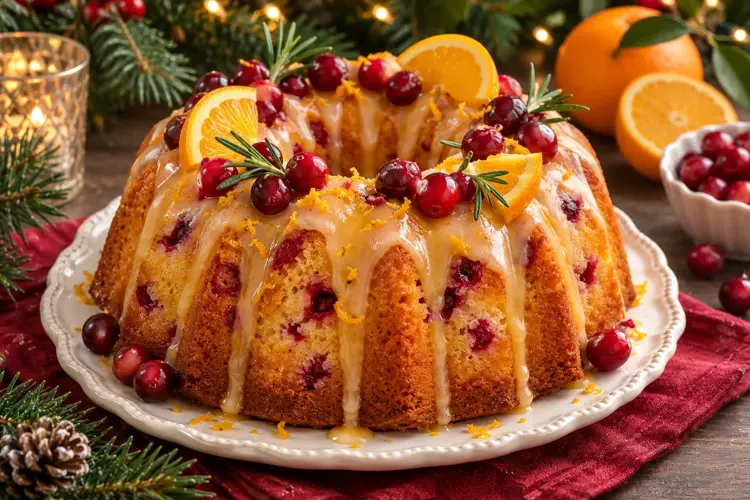
Cranberry orange Christmas Bundt cake combines a buttery citrus crumb with bright pockets of tart fruit. A thin orange glaze follows the grooves of the cake and makes each slice lightly sweet at the edge. This cake looks finished even with simple decoration, which leaves more time for the rest of a Christmas meal. Use a pan with broad ridges if you prefer an easy release, and let the cake cool before glazing so the lines stay visible.
Yield and timing
Makes one 10-cup Bundt cake, about 12 servings. Allow 30 minutes of preparation, 50 to 60 minutes to bake, and about 90 minutes to cool before glazing.
Ingredients
- 2¾ cups (345 g) all-purpose flour
- 2 teaspoons baking powder
- ½ teaspoon baking soda
- ¾ teaspoon fine salt
- 1 cup (226 g) unsalted butter, softened
- 1½ cups (300 g) granulated sugar
- Finely grated zest of 2 oranges
- 4 large eggs
- 1 teaspoon vanilla extract
- ¾ cup (180 ml) buttermilk
- ¼ cup (60 ml) fresh orange juice
- 1½ cups (150 g) fresh or frozen cranberries
- 1 cup (120 g) powdered sugar
- 2 to 3 tablespoons orange juice, for glaze
- Soft butter and a little flour, for the pan
Step-by-step preparation
- Heat the oven to 350°F (175°C). Brush softened butter into every groove of a 10-cup Bundt pan, including the center tube. Dust with flour and tap out the excess. Whisk the flour, baking powder, baking soda, and salt. Reserve one tablespoon of the flour mixture to coat the cranberries.
- Rub the orange zest into the sugar with your fingertips. Beat the scented sugar and softened butter for three minutes. Scrape the sides of the bowl. Add the eggs one at a time, mixing each in before the next, then add vanilla. Stir the buttermilk and quarter cup of orange juice together separately.
- Mix the flour into the butter mixture in three additions, alternating with the buttermilk mixture. Stop when most flour streaks disappear. Toss the cranberries in the reserved flour and fold them into the batter with a flexible spatula. Scrape the batter into the pan and spread it around the central tube.
- Bake for 50 to 60 minutes. Check the thickest part with a skewer. It should come out with a few crumbs and without wet batter. Let the cake rest in the pan for 12 to 15 minutes, then turn it out onto a rack. Cool completely. Whisk powdered sugar with just enough orange juice to make a pourable glaze, and spoon it over the crown.
Get the cake out of the pan intact
Grease the pan just before starting, so you have time to notice areas the pastry brush missed. A thin, even flour coating is easier to see in a dark pan. Turn the pan upside down and tap gently to clear the excess flour before you fill it. If the cake does not release after inverting, leave the pan upside down over the rack for a minute. The weight of the cake may help it loosen without prying.
If using frozen berries, fold them in straight from the freezer. Thawed berries can bleed into the batter and contribute extra moisture. Large berries may make the skewer look wet if you happen to pierce one. Check a second spot before deciding that the cake needs more time.
Make ahead and serve
Bake the cake the day before serving, cool it completely, and cover it. Add the glaze once you have put the cake on its serving plate. If the glaze slides down too quickly, add a little more powdered sugar. For a lighter finish, use a thinner drizzle and let it run down only a few ridges.
Slice with a serrated knife to avoid dragging cranberries through the crumb. Serve plain at brunch or add lightly sweetened whipped cream for dessert. For gifting, wait until the glaze is dry to the touch, then wrap the cake loosely so the decoration does not stick to the covering.