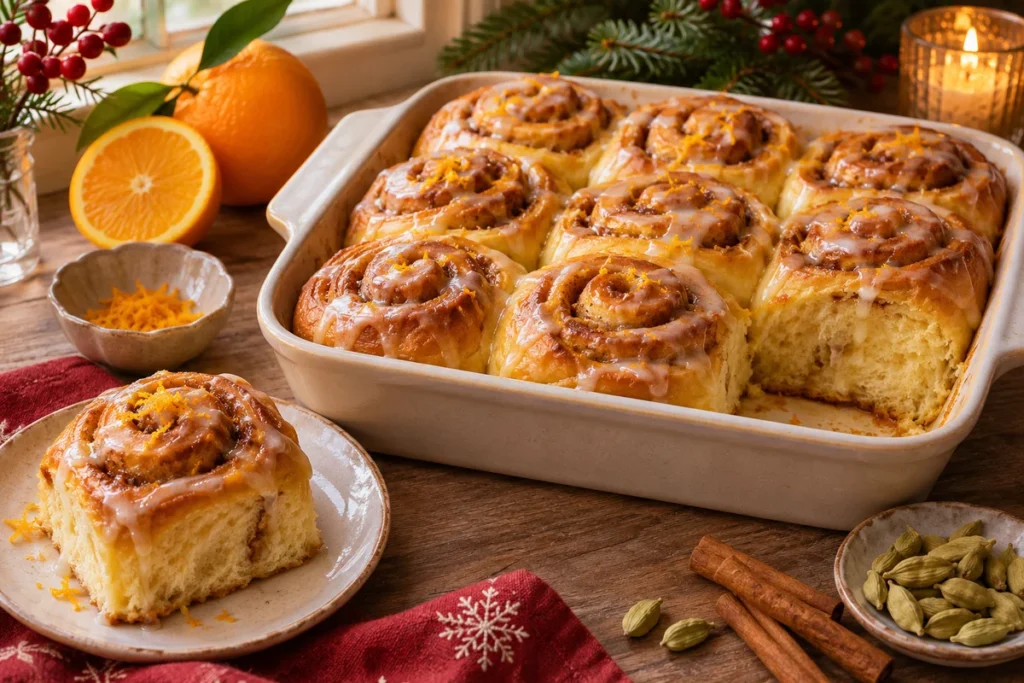
Soft citrus rolls for Christmas brunch
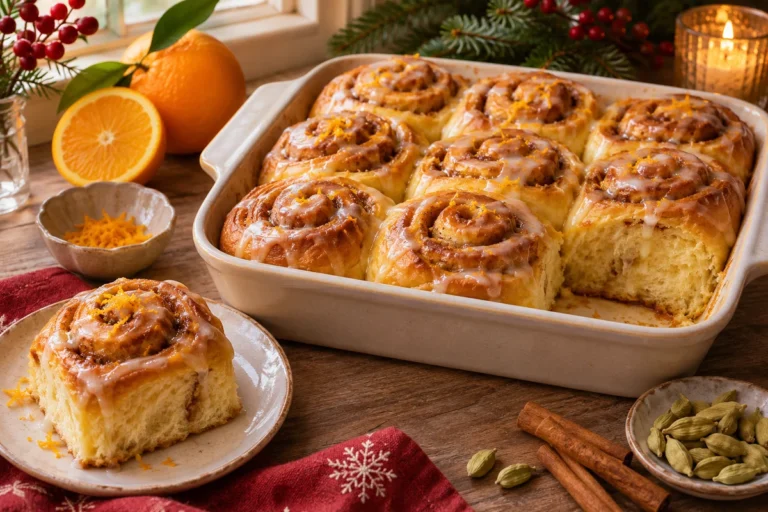
Orange cardamom Christmas rolls are soft breakfast buns with a brown sugar spiral, citrus zest, and a thin orange glaze. Cardamom brings a floral note to the filling, while a little cinnamon keeps the flavor familiar. The rolls bake close together so their sides stay tender and separate easily when pulled apart at the table.
Start with the dough early enough to allow for two rises. The times will vary with the warmth of the kitchen, so use the size and feel of the dough as your guide. If you have guests arriving in the morning, shape the rolls the evening before and let them finish rising while you set out the coffee.
Yield and timing
Makes 9 rolls in an 8-inch square pan. Allow about 35 minutes of active preparation, 75 to 100 minutes for the first rise, 35 to 60 minutes for the second rise, and 24 to 30 minutes for baking. Cooling for 15 minutes before glazing keeps the topping visible.
Ingredients
- 3 cups (375 g) all-purpose flour, plus a little for the surface
- 2¼ teaspoons instant yeast
- ¼ cup (50 g) granulated sugar
- ¾ teaspoon fine salt
- ¾ cup (180 ml) lukewarm whole milk
- 1 large egg
- 4 tablespoons (57 g) unsalted butter, softened
- Finely grated zest of 1 large orange, divided
- 4 tablespoons (57 g) unsalted butter, softened, for the filling
- ½ cup (100 g) packed light brown sugar
- 1 teaspoon ground cardamom
- ½ teaspoon ground cinnamon
- ¾ cup (90 g) powdered sugar
- 1½ to 2 tablespoons fresh orange juice
What the dough should feel like
A slightly tacky dough is normal here. Add extra flour by the teaspoon only if the dough is hard to handle after kneading. Too much flour makes the buns tougher. If the dough clings to your hands, scrape it off with a dough scraper and let it rest for five minutes before continuing. The pause gives the flour time to absorb more liquid.
How to make orange cardamom rolls
- Mix the flour, yeast, granulated sugar, and salt in a large bowl. Stir in the milk, egg, and half the orange zest until a rough dough forms. Knead in the softened butter a tablespoon at a time. Continue kneading for 8 to 10 minutes by hand, until the dough feels elastic and looks smoother than when you began.
- Place the dough in a lightly greased bowl, cover it, and let it rise until close to doubled, about 75 to 100 minutes. Meanwhile, mix the brown sugar, cardamom, cinnamon, and remaining zest. Grease the pan and line the base with parchment for an easier lift after baking.
- Roll the dough into a 12-by-10-inch rectangle on a lightly floured surface. Spread the filling butter over it, leaving a narrow border at the far long edge. Sprinkle the spiced sugar evenly over the butter. Starting from the near long edge, roll the dough into a snug log and pinch the seam closed.
- Cut nine equal slices using unflavored dental floss or a sharp serrated knife. Set the slices cut side up in the pan. Cover and let rise until puffy, 35 to 60 minutes. Toward the end of the rise, heat the oven to 350°F (175°C). The rolls should almost touch before they go in.
- Bake 24 to 30 minutes, until the tops are golden and the center roll springs back lightly when touched. Let cool in the pan for 15 minutes. Stir the powdered sugar with the orange juice, starting with the smaller amount. Drizzle over the warm rolls just before serving.
Overnight option and serving
To make the rolls ahead, cover and refrigerate the pan immediately after slicing and arranging the dough. In the morning, let the rolls stand until visibly puffy before baking. Depending on the room and the dough temperature, they may need longer than the standard second rise. Judge by the dough rather than by the timer.
If you want to keep the glaze thick, let the rolls cool a little longer before drizzling. To serve them warm later in the day, cover the pan loosely with foil and warm it briefly in a low oven. A fresh orange sliced into wedges makes a simple addition to the brunch table.
Shaping tips for even spirals
Mark the log into nine sections with the back of a knife before making the cuts. That keeps the last roll from ending up much smaller than the others. When you use floss, slide it under the log, cross the ends over the marked line, and pull gently in opposite directions. If a spiral comes loose, tuck its tail underneath before placing it in the pan. Set the most even slices near the perimeter and use a slightly uneven one in the center, where the neighboring rolls help hold it upright.