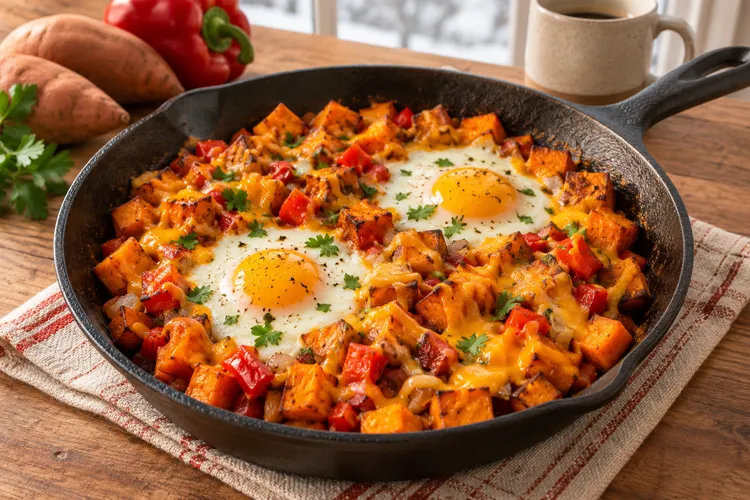
Sweet potato hash turns a few winter pantry staples into a hot breakfast. Smoked paprika and cheddar add depth, and a red pepper brings sweetness and color. Cut the sweet potato evenly so it softens while the outside takes on color. The recipe makes two skillet portions in about 35 minutes.
Ingredients
- 1 large sweet potato, peeled and diced
- 1 small onion, diced
- 1 red bell pepper, diced
- 2 tablespoons olive oil, divided
- ½ teaspoon smoked paprika
- Salt and pepper to taste
- 2 large eggs
- ⅓ cup grated sharp cheddar
- Chopped parsley, optional
Step-by-step preparation
- Start the sweet potato. Dice the potato into half-inch pieces. Heat half the oil in a wide skillet and add the potato, a pinch of salt and two tablespoons water. Cover and steam for five to seven minutes over medium heat. Check with a fork. It should enter with some resistance before you uncover the skillet.
- Brown the vegetables. Let the remaining water evaporate, then add the rest of the oil, onion and pepper. Cook for eight to twelve minutes, stirring when the bottom starts to color. Stir in the paprika near the end so it does not burn. When the sweet potato is tender, taste and adjust the seasoning.
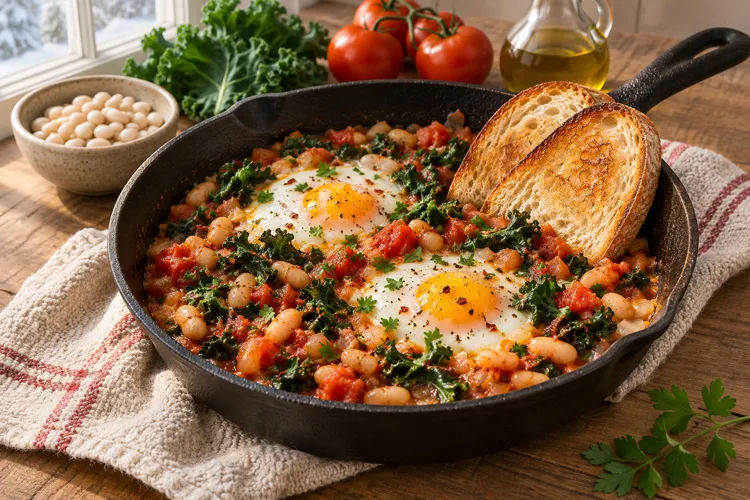
- Cook the eggs. Make two wells and crack an egg into each. Sprinkle the cheese across the vegetables. Cover and cook over low heat until the whites and yolks are set. Slide a spatula under each portion and serve warm with parsley if you have it.
Getting browned edges
The skillet needs room for steam to escape. If the vegetables are piled up, they will soften without much color. A twelve-inch skillet works well for the yield given. After uncovering, spread the potato into a shallow layer and let it sit undisturbed briefly between stirs. If you double the recipe, brown the vegetables in batches and transfer them to a larger covered skillet for the eggs.
What to substitute
Use a yellow pepper or diced poblano in place of the red bell pepper. Sharp cheddar handles the smoky seasoning well, but Monterey Jack melts smoothly and grated aged Gouda contributes a nutty flavor. If you are using already roasted sweet potatoes, skip the steaming stage and add the potatoes after the onion and pepper begin to soften. Use a lighter touch when stirring leftovers so the cubes hold their shape.
Make-ahead steps
Dice the onion and pepper the day before. Store them together in a covered container in the refrigerator. Cook the vegetable base in advance if you like, then reheat it until hot in a skillet and cook the eggs fresh. Keep cheese separate until the final covered stage. This gives the reheated vegetables time to dry and brown before the cheese goes on.
Serving the skillet
Serve with toasted bread to pick up the browned pieces and melted cheese. A spoonful of plain yogurt or tomato salsa adds moisture and acidity. If you are sharing from the skillet, place a trivet under it and let it rest for a minute so the portions lift out cleanly. Offer hot sauce at the table if diners prefer different heat levels.
How to manage the skillet temperature
If the pan is hot enough to brown the potato well, the paprika can darken quickly once it hits the oil. Stir it into the vegetables when they are already tender, then turn down the heat before you add the eggs. If the skillet has very little oil left, wait to add the spice until you can spread it evenly with a quick stir. A cast iron pan stays hot when the burner is lowered. Move it off the heat briefly if the vegetables are continuing to color quickly.
The egg and cheese stage
Make depressions deep enough that an egg stays in place as it begins to set. Crack each egg into a cup first if you are worried about shell fragments. Sprinkle the cheddar around the wells so the egg surface remains visible for checking. If the yolks take longer than you expect, turn the heat down and keep the lid on. Raising the heat aggressively can burn the vegetables while the tops of the eggs are still cooking.
Planning breakfast for two
If one person is eating later, cook the whole vegetable base and set half aside before adding the first egg. That half will keep its texture better than a completed portion that has been warmed twice. When you reheat the second portion, stir from the edges and let the middle warm without pressing the sweet potatoes into a mash. Taste and add a pinch of salt only if the finished hash needs it, since the cheddar contributes seasoning.
Peeling or scrubbing the potatoes
Peeling makes each bite of hash uniformly soft inside. If you prefer to leave the skin on, scrub it well and trim away any tough patches first. Cut with a sharp knife so the skins stay attached to the pieces.