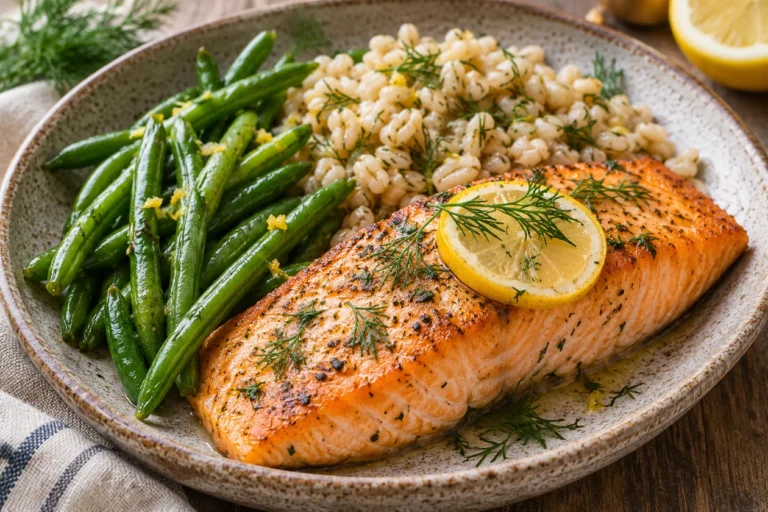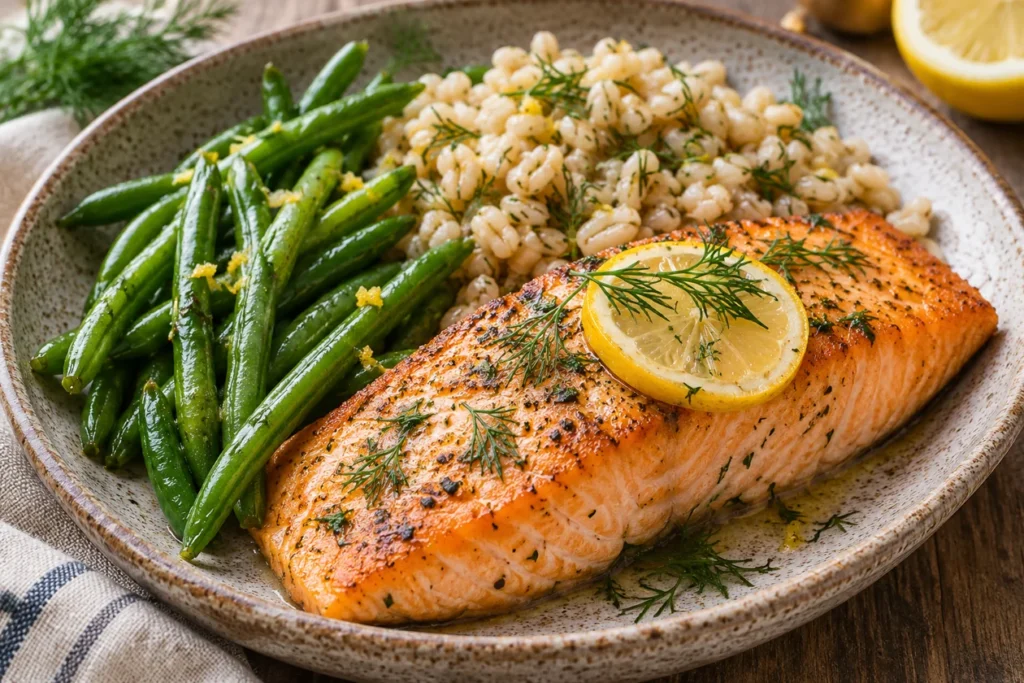
Lemon dill salmon with green beans and barley brings three distinct textures to the dinner table. The fish flakes under a fork, the beans can be cooked until tender, and the grains catch the lemon and dill dressing. The barley takes the longest, so start it first and use the simmering time to trim the beans and prepare the fish. This makes a useful dinner for two, especially when you want something warm without several sauces or heavily seasoned packaged sides.
Ingredients for two
- 2 salmon fillets, about 4 to 5 ounces each
- ⅓ cup dry pearl barley
- 8 ounces green beans, trimmed
- 1 tablespoon extra-virgin olive oil
- 1 small lemon, half for roasting and half for juice
- 2 tablespoons chopped fresh dill
- 1 teaspoon Dijon mustard, optional
- Ground black pepper to taste
Cook the barley
Rinse the barley in a fine strainer. Cook it according to the package directions, using water. Pearl barley usually takes around 30 minutes, though some brands take longer. Taste a grain when it starts to swell. It should yield when you bite it. If the center still feels firm, continue simmering and check again after five minutes. Drain excess water, then return the barley to the warm pan and cover it loosely. A tablespoon of lemon juice and a little dill are enough to season the grains if you prefer to dress them separately.
Roast the salmon and cook the beans
Heat the oven to 400°F. Line a rimmed pan with parchment. Pat the fish dry, place it skin side down, and brush it with some of the olive oil. Scatter black pepper and thin lemon slices over the top. Roast until the center reaches 145°F on an instant-read thermometer. A fillet of average thickness often takes about 10 to 15 minutes. Insert the probe sideways into the thickest part so the tip lands in the center. Transfer the fish with a broad spatula and discard the skin or leave it on the plate according to preference. Steam the beans while the fish cooks. Start checking around six minutes and continue until they are as tender as you like.
Make the dressing and serve
Stir lemon juice into the remaining olive oil. Add dill and Dijon, if using. A spoonful of warm water helps a small quantity of dressing spread over both plates. Spoon the barley onto the plates, arrange the salmon alongside, and give the beans the largest share of space. Finish with dressing at the table. If you prefer soft foods, chop the beans into short pieces after steaming, and add a splash of warm liquid to the barley before serving. Check the salmon for pin bones as you separate it into flakes.
How to change the recipe
Frozen green beans work well, and you can steam them straight from the bag according to the package. Thicker beans can be split lengthwise after cooking, which makes them easier to pick up with a fork. Cooked brown rice can replace the barley if it is already in your refrigerator. Barley contains gluten, so use rice or certified gluten-free grains when avoiding gluten. Fresh parsley is a good replacement for dill. If the lemon tastes sharply acidic, add a spoonful of plain yogurt to the dressing and stir until smooth. Serve the yogurt dressing separately if someone prefers the salmon plain.
Prep and leftovers
Make the barley ahead and refrigerate it in a shallow container, so cooking dinner mostly involves the salmon and beans. You can also trim the beans in advance and refrigerate them until needed. Store the cooked components separately if possible. A refrigerated portion can become a lunch bowl with flaked salmon, chopped green beans, and barley, dressed just before eating. If you plan to eat it warm, reheat leftovers until they reach 165°F. Add a splash of water to the barley when reheating so the grains stay soft. Move leftovers into shallow containers and refrigerate within two hours of cooking.
What to look for at the grocery store
Choose fillets of similar thickness so they finish at about the same time. If one has a noticeably thin tail end, tuck that end under before roasting. Frozen plain salmon is a practical option for a household of one or two because you can thaw only what you need in the refrigerator. Pick a small lemon that feels heavy for its size. Save the unused dill stems for broth, or mince the tender parts and use them in the dressing.
Bring everything to the table warm
Set the plates out before the salmon goes in the oven. Barley holds its heat well with the lid on, while cooked green beans cool quickly once they are spread on a plate. Leave them covered in their steamer for a minute or two if the salmon needs longer. Add the dressing right before serving so its lemon flavor stays fresh. If you want to serve the fish in pieces, slide a fork through one end of the fillet and let it break along its natural seams.
How this dinner can fit a diabetes meal plan
The CDC’s plate method is a practical starting point. On a nine-inch plate, the CDC suggests using about half the space for nonstarchy vegetables, about a quarter for protein foods, and about a quarter for carbohydrate foods. Set out the components separately where possible. If the meal is soup, portion a bowl and add a side of vegetables if that works for your plan. Carb goals and serving sizes can vary with medicines, activity, appetite, and other health needs. If you count carbohydrates, use the labels for your ingredients and measure the portion you serve. A registered dietitian or diabetes care team can help adapt the meal to your needs. CDC diabetes meal planning guidance. The barley is the main carbohydrate food here. Keep it in a separate serving bowl so it is easy to portion.