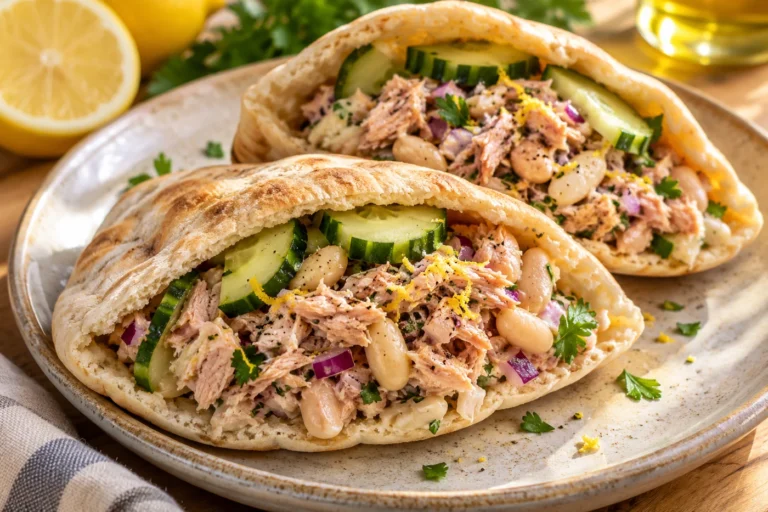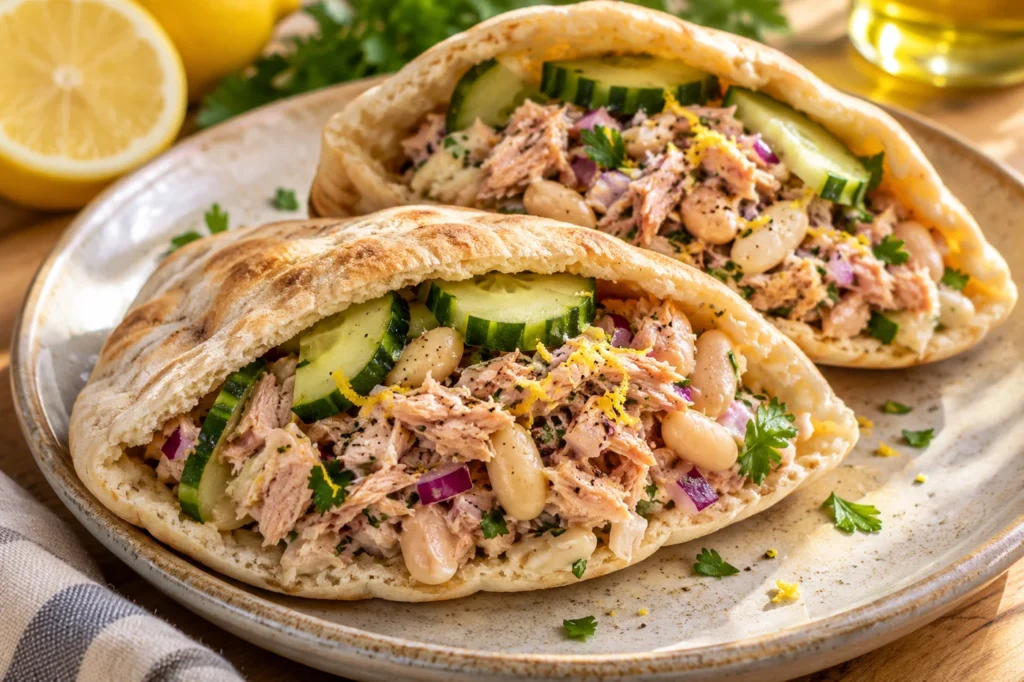
Lemon tuna and white bean pita pockets are useful on evenings when even a pot of pasta feels like an extra step. Canned tuna and beans make a substantial filling, and crisp cucumber and parsley bring a fresh taste. A little mustard thickens the lemon dressing so it clings to the beans. Warming the pita briefly makes it pliable enough to open without tearing. The filling serves three to four and can be assembled in about fifteen minutes. The only cooking, if you choose to do it, is warming the bread.
Ingredients
- 2 cans tuna in water or olive oil, 5 ounces each, drained
- 1 can white beans, 15 ounces, drained and rinsed
- ½ English cucumber, diced small
- 2 tablespoons chopped parsley
- 2 tablespoons finely chopped red onion, optional
- 2 tablespoons olive oil, less if using oil-packed tuna
- 1½ tablespoons fresh lemon juice
- 1 teaspoon Dijon mustard
- Black pepper and fine salt to taste
- 4 medium pita breads
- A handful of baby spinach or shredded lettuce, optional
How to make the pita pockets
Mix the dressing in the serving bowl
Whisk olive oil, lemon juice, mustard and a few grinds of pepper. Taste for acidity, especially if the lemon is very sharp. Use a little less oil with tuna packed in oil because some remains after draining. If using onion and you want it milder, let it sit in the dressing for about five minutes before adding the other ingredients. The lemon softens the raw bite and gives the dressing more flavor.
Fold in the tuna and beans
Add the beans first and turn them through the dressing. Mash a few with the back of a fork if you like a thicker filling. Add the drained tuna in large flakes, followed by cucumber and parsley. Fold gently so the tuna remains visible in the mixture. Taste before adding salt. If the filling seems dry, add a little more dressing or a drizzle of oil. If it is wetter than you want, lift it from the bowl with a slotted spoon when you fill the pitas.
Warm and fill the bread
Warm the pitas in a dry skillet for a few seconds per side, or briefly in the microwave. Cut a small piece off one edge and open the pocket carefully with your fingers. Line with lettuce or spinach if using. Spoon the filling inside and stop when the pocket still closes easily around it. Serve extra filling alongside instead of pushing it into the bread. If a pita splits, open it flat and serve it as a folded wrap.
Choosing the ingredients
Tuna packed in water lets the lemon dressing stand out. Oil-packed tuna has a richer flavor and may need less added oil. Chunk tuna is easy to break into bite-size pieces and does not need extensive mashing. Cannellini or great northern beans both work, but very large butter beans can tear a narrow pocket. If using large beans, cut a few in half. English cucumber usually has a thin skin. With a large seeded cucumber, scoop out the wet center before chopping it.
Flavor changes for a second dinner
Try dill and chopped capers instead of parsley for a sharper filling. A few thin slices of radish can replace red onion if you want a milder crunch. Chopped roasted peppers give the mixture sweetness, but blot them first. To make a meatless pocket, use a second can of beans and mash enough to bind the filling. If you want a creamier dressing, stir a spoonful of plain Greek yogurt into the finished mixture and check the lemon before adding more.
Keep the pita from going soggy
Drain the beans and tuna well and add cucumber near serving time. Greens inside the pocket form a useful layer between the moist filling and the bread. For a packed meal, carry the filling in a separate chilled container and build the pita when you are ready to eat. Store leftover filling covered in the refrigerator. Warm the bread separately, since reheating the assembled pita can make the cucumber limp. Leftover filling can also go over a baked potato or a pile of shredded cabbage.
Make it a dinner plate
Add sliced tomatoes or a bowl of soup if you want a larger meal. A wedge of lemon and a few olives make a quick side if the cupboard is nearly empty. For small pitas, cut each one across the middle and serve two halves per plate. That gives diners an open edge to eat from and makes it easier to see where the filling needs to go. The same mixture works on toasted bread if you cannot find pita, and it can also be spooned into sturdy lettuce leaves for a lighter plate.
For a packed dinner, carry the pita halves in a separate container and spoon in the filling when you are ready to eat. Bring a few extra cucumber slices separately, too. Adding them at the last minute keeps their crunch and gives each pocket a fresh bite.