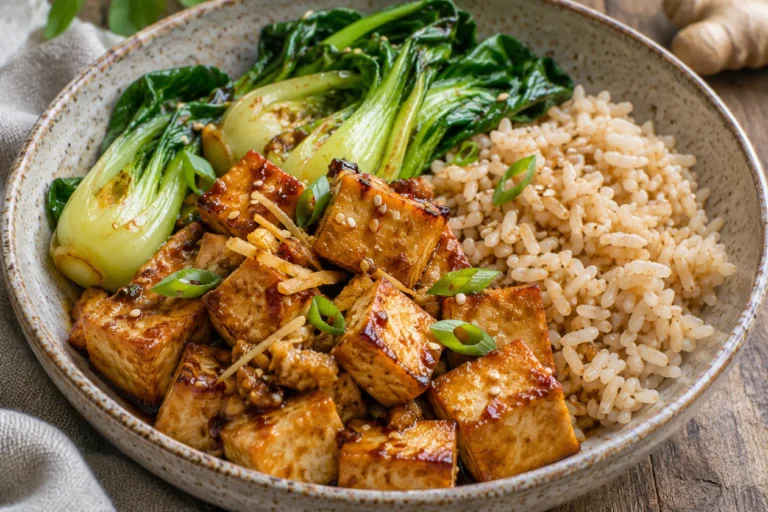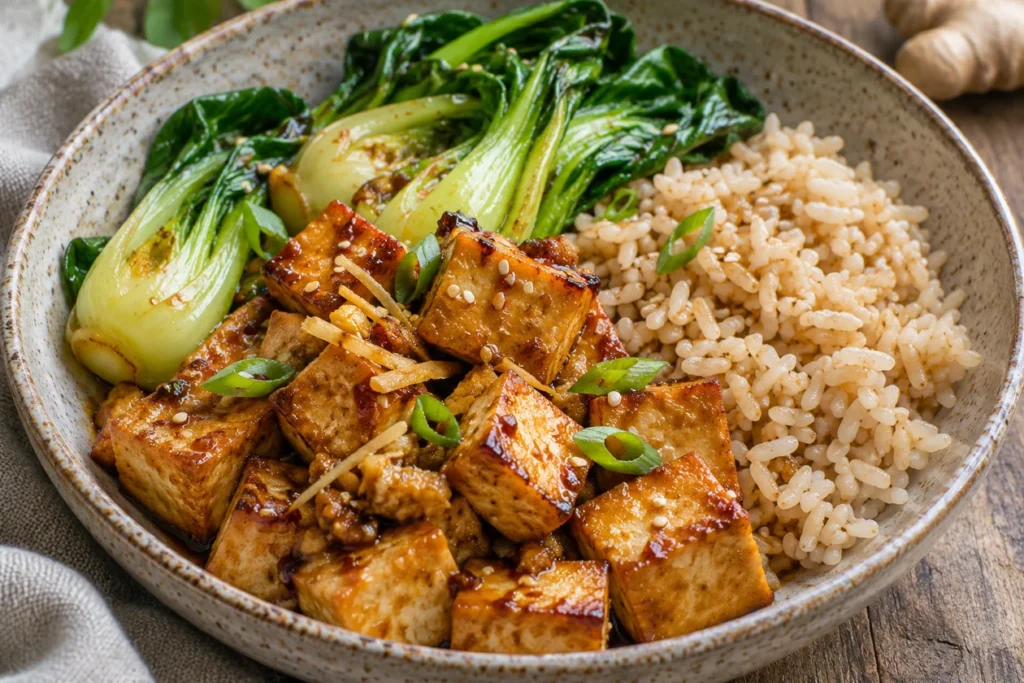
Ginger tofu with bok choy and brown rice is a skillet dinner with a light, savory sauce. The tofu browns on two sides and stays tender inside, while the bok choy stems soften without losing all their bite. The rice cooks separately, so each person can spoon out the portion that suits their meal. Start with cooked brown rice if you have it, and the rest comes together in one skillet. Fresh ginger and rice vinegar give the vegetables enough flavor to work with a light coating of sauce.
Ingredients for two
- 8 ounces extra-firm tofu, drained
- 3 cups chopped bok choy, stems and leaves separated
- 1 cup cooked brown rice
- 1 tablespoon neutral oil, divided
- 2 teaspoons finely grated fresh ginger
- 1 garlic clove, finely chopped
- 2 teaspoons reduced-sodium soy sauce
- 1 tablespoon unseasoned rice vinegar
- 3 tablespoons water
- ½ teaspoon toasted sesame oil, optional
Prepare the tofu and greens
Blot the tofu with a clean kitchen towel and cut it into cubes about three quarters of an inch across. The surface should feel dry enough that the cubes do not immediately drip when you transfer them to a plate. Separate the bok choy leaves into a pile and rinse them well. Dirt can collect near the base. Slice the stems into short pieces and roughly chop the leaves. Stir together the vinegar, soy sauce, water, and sesame oil in a small bowl. Set it beside the stove so it is ready when the greens soften.
Sear the tofu and soften the stems
Heat half the neutral oil in a wide nonstick skillet over medium heat. Add the tofu with a little space around each piece. Leave it alone until the underside turns gold and releases easily, about three to five minutes. Flip the cubes and brown a second side. Move them to a plate. Add the remaining oil, then the stems. Stir for two minutes. Add the garlic and ginger and cook briefly until fragrant. If the pan seems dry or the garlic starts coloring quickly, add a spoonful of water and turn the heat down slightly.
Simmer briefly and portion the rice
Add the bok choy leaves, sauce, and browned tofu. Cover for a minute or two to let the leaves wilt, then uncover and gently turn everything to coat. Cook a little longer if you prefer softer stems. The sauce should stay light enough to spoon over the rice. If the pan dries out, add warm water a tablespoon at a time. Divide the vegetables and tofu between two bowls and spoon in the rice separately. For a softer dinner, use firm tofu and skip the browning step. Simmer it gently in the sauce long enough to warm through, then lift it with a broad spoon.
Adjust the flavor and the vegetables
Seasoned rice vinegar can contain added sugar and salt, so look for a bottle labeled unseasoned if you want control over the dressing. Fresh lemon or lime juice works in its place. Substitute sliced zucchini and spinach for the bok choy if those are what you have. Put zucchini in the pan first, and add the spinach just before the sauce. If the ginger is particularly pungent, start with one teaspoon and taste the sauce before adding more. Add minced scallion greens at the table for a fresh finish.
Use a shorter prep sequence
Buy washed baby bok choy if available, but check the base for grit. A broad skillet makes it easier to turn the cubes without breaking them. If doubling, brown tofu in batches and combine it with the greens at the end. Store cooked rice and the tofu mixture separately in shallow containers and refrigerate promptly. Reheat leftovers to 165°F. A covered pan with a spoonful of water warms the greens and softens the rice without concentrating the soy sauce. For a packed lunch, keep the rice below the tofu so it catches the sauce when reheated.
Work with the tofu you can buy
A block packed in water usually needs more blotting than vacuum-packed tofu. If the cubes are still wet, allow them to sit on a fresh towel while you chop the greens. If your skillet sticks easily, let the tofu brown fully before trying to lift it. When the pan is ready, the broad face of a thin spatula can slide under several cubes in one motion. For another night, warm the tofu and vegetables with a splash of broth and serve spooned over the rice for a looser, soup-like bowl.
How this dinner can fit a diabetes meal plan
The CDC’s plate method is a practical starting point. On a nine-inch plate, the CDC suggests using about half the space for nonstarchy vegetables, about a quarter for protein foods, and about a quarter for carbohydrate foods. Set out the components separately where possible. If the meal is soup, portion a bowl and add a side of vegetables if that works for your plan. Carb goals and serving sizes can vary with medicines, activity, appetite, and other health needs. If you count carbohydrates, use the labels for your ingredients and measure the portion you serve. A registered dietitian or diabetes care team can help adapt the meal to your needs. CDC diabetes meal planning guidance. Brown rice is the main carbohydrate food here. Keep it separate until you portion each bowl, especially if you are using rice that is already cooked.