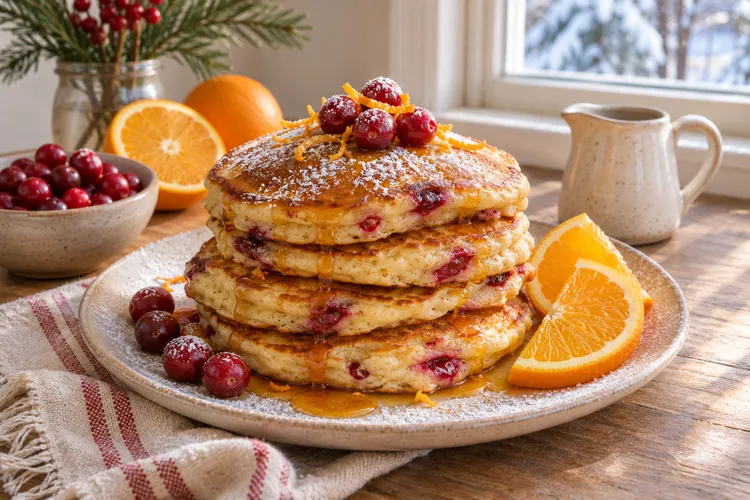
These cranberry orange pancakes use winter citrus to balance tart cranberries. The batter is lightly sweetened, leaving room for maple syrup at the table. Chopping the berries helps distribute them so the pancakes cook evenly, while rubbing orange zest into sugar brings its aroma into the whole batch. The recipe makes about twelve small pancakes, enough for four people. Allow fifteen minutes to mix the batter and about twenty minutes to cook it.
Ingredients
- 1½ cups all-purpose flour
- 2 tablespoons granulated sugar
- 2 teaspoons baking powder
- ½ teaspoon baking soda
- ¼ teaspoon fine salt
- Finely grated zest of 1 orange
- 1¼ cups buttermilk
- 1 large egg
- 2 tablespoons melted unsalted butter
- ¾ cup cranberries, fresh or frozen
- Neutral oil for the skillet
- Maple syrup to serve
Step-by-step preparation
- Prepare the fruit. Rinse fresh cranberries, discard any soft ones and dry them on a towel. Chop them roughly so the largest pieces are about the size of a pea. Leave frozen cranberries frozen while chopping and use them straight away. Finely grate the orange zest, avoiding the bitter white layer just below the skin.
- Make the batter. Rub the orange zest into the sugar in a large bowl until it feels fragrant and slightly damp. Add the flour, baking powder, baking soda and salt, then whisk thoroughly. In another bowl whisk the buttermilk and egg, then add the butter once it has cooled a little. Fold the liquid into the flour mixture only until the dry streaks disappear. Small lumps will soften during the brief rest. Fold in the cranberries last and let the batter stand for five minutes.
- Cook in batches. Warm a large skillet over medium heat and wipe it with a thin film of oil. Drop a quarter cup of batter for each pancake, leaving enough space to get a spatula under the edges. Cook until bubbles appear near the center and the edges start to look matte, about two to three minutes. Flip and cook for another minute or two. Check the first pancake by tearing it open. If the middle is wet while the surface is already dark, lower the heat before continuing.
- Serve warm. Set the cooked pancakes on a rack over a tray in a low oven if you are serving everyone together. The rack allows steam to escape, so the pancakes stay light as you finish the last batch. Serve with maple syrup and, if you like, a few slices of fresh orange.
Why use zest instead of juice?
Orange zest carries strong flavor without changing the amount of liquid in the batter. Buttermilk supplies acidity and gives the pancakes their characteristic tenderness. Adding a lot of juice can thin the batter and change how it browns. If you want to use the rest of the orange, cut it into segments and serve them alongside or squeeze it over plain yogurt for a topping.
Troubleshooting the skillet
A heavy pan evens out temperature swings between batches. If you see smoke or the oil shimmers aggressively, turn down the heat and move the pan off the burner for a moment. When pancakes stick despite enough oil, let the first side cook a little longer before lifting. Use a wide thin spatula and flip each pancake once. Pressing the cooked pancake with the spatula squeezes out the air you trapped in the batter.
Storage and variations
Cool leftover pancakes in a single layer. Refrigerate in a sealed container for up to three days or freeze them with parchment between layers. Reheat from chilled in a toaster or a dry skillet over low heat. Frozen pancakes can be warmed in a low oven until heated through. A half cup of chopped strawberries makes a gentler version when cranberries are unavailable. Use a little less syrup at the table because strawberries are sweeter.
For a winter brunch
Serve the pancakes on a warm platter with a bowl of plain yogurt, sliced oranges and lightly toasted pecans. A mix of warm pancakes and cool fruit gives the meal a welcome contrast. If you are doubling the recipe, mix the two portions separately so the second batch is freshly mixed when the first one comes off the skillet.
Keeping the fruit evenly distributed
Chopped berries can sink if the bowl is left standing while the skillet heats. Give the batter one gentle fold before scooping the last few pancakes. If you want a more even pattern, keep the chopped berries out of the batter, scatter a little over each portion immediately after it hits the skillet, and cover the largest pieces with a dab of batter. This also gives you a way to make plain pancakes from the same batch for someone who prefers them.
A good first batch for children
Use a two-tablespoon scoop for smaller pancakes. Leave a wide gap around each one because it is easier to flip a small pancake cleanly when the spatula has a straight path. Check them earlier than the full size version.