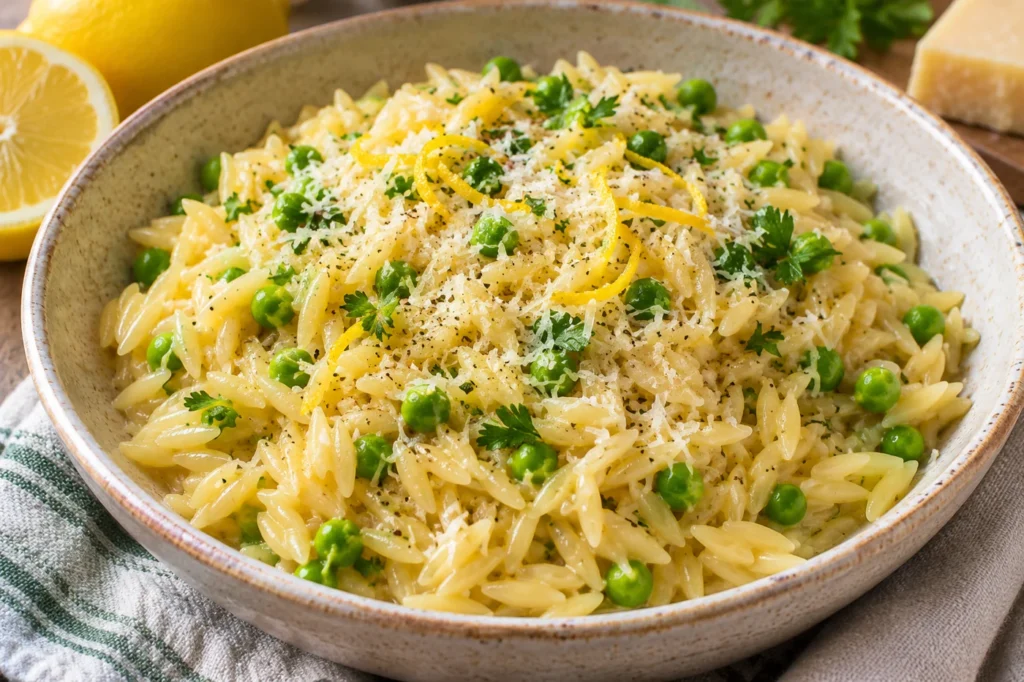
One-pot lemon Parmesan orzo with peas is what I would make on a night when the cupboard contains half a box of pasta and the freezer contains a bag of vegetables. The orzo cooks directly in broth, and the starch it releases thickens the sauce. A handful of Parmesan and a squeeze of lemon finish the pot. There is no separate sauce to prepare, and the peas go in straight from the freezer. The finished dish should fall loosely from a spoon, with the peas still brightly colored and enough lemon to taste through the cheese.
Recipe at a glance
This serves four with a side or three as a generous main. Allow five minutes to set out the ingredients and about twenty minutes at the stove. Use a three-quart saucepan or a deep skillet with enough room to stir. A broad pan evaporates liquid faster, so have a splash of water nearby if yours is particularly wide.
Ingredients
- 1 tablespoon olive oil
- 2 garlic cloves, minced
- 1½ cups dry orzo
- 3 cups low-sodium vegetable or chicken broth, plus more as needed
- 1 cup frozen peas
- ½ cup finely grated Parmesan, plus more to serve
- Zest of 1 lemon
- 1 to 2 tablespoons lemon juice
- 1 tablespoon unsalted butter
- Black pepper and salt to taste
How to make lemon Parmesan orzo
Start the pasta in the pot
Warm the olive oil over medium heat and stir in the garlic. Give it about thirty seconds, just until you can smell it. Add the dry orzo and turn it through the oil for another minute. Some grains may turn slightly golden. Pour in the broth, stir the bottom and bring the pot to a gentle boil. Lower the heat enough to keep the liquid bubbling steadily without spitting.
Stir and check the texture
Simmer uncovered for about eight to eleven minutes, following the timing on the package as a guide. Stir every minute or two, particularly across the bottom. The pasta should feel almost tender before the broth disappears. If there is still a hard center and very little liquid, add a quarter cup of warm water or broth. If the pasta is almost done but the liquid looks thin, simmer uncovered rather than increasing the heat sharply.
Add peas and finish off the heat
Stir in the peas when the orzo has about two minutes left to cook. The cold peas briefly slow the simmer, so give the pot time to come back up to temperature. Once the orzo is tender, turn off the heat and stir in the butter, Parmesan and lemon zest. Add one tablespoon of lemon juice and taste. Add the rest only if the dish needs it. Season with pepper and check the salt once the cheese has melted.
How to keep the sauce creamy
Finely grated cheese melts more evenly than coarse shreds. If the pot looks thick before you add it, loosen the pasta with warm water first. The warmth left in the pasta is generally enough to melt Parmesan. Stirring it in over a fierce boil can make it clump. The orzo continues to absorb liquid as it sits, so leave the sauce a little looser than you want at the table. For a later second helping, add a spoonful of broth and stir again.
Easy substitutions
Frozen chopped spinach works in place of peas, but thaw and squeeze it first if using a block. Fold in a handful of cooked shredded chicken with the peas for a heartier dinner and heat it through. For a vegetarian version, select a hard grating cheese made with vegetarian rennet and use vegetable broth. Avoid replacing the orzo with rice using the same timing. Rice cooks differently and may need a covered pan and a different amount of liquid.
What to serve alongside
The sauce is mild enough to work with a sharply dressed green salad or a plate of sliced tomatoes. If you are using a lemon for the pasta, save a wedge to squeeze over the salad. Toasted breadcrumbs can provide contrast when there is no bread on the table. Brown a few spoonfuls in a dry skillet and sprinkle them over individual bowls just before eating.
Leftovers and reheating
Refrigerate leftovers promptly in a covered container and use within three days. Reheat a portion gently with a small splash of water or broth, stirring so it warms evenly. Save the final lemon wedge for reheating day if you can. A few fresh drops restore the brightness that fades after the pasta sits overnight.
If you are using a smaller pot, stir more often because the pasta sits in a deeper layer. Start checking before the package suggests, especially if you want to hold the sauce briefly before serving. Keep the lemon and cheese measured nearby so the finishing steps take only a moment.