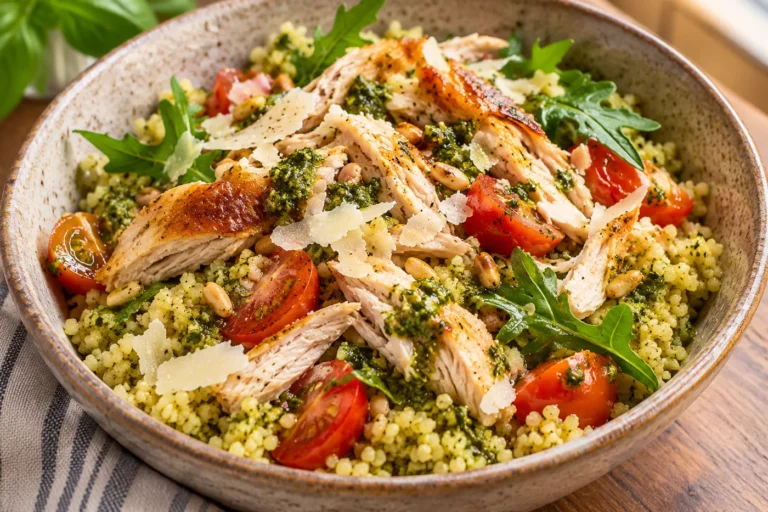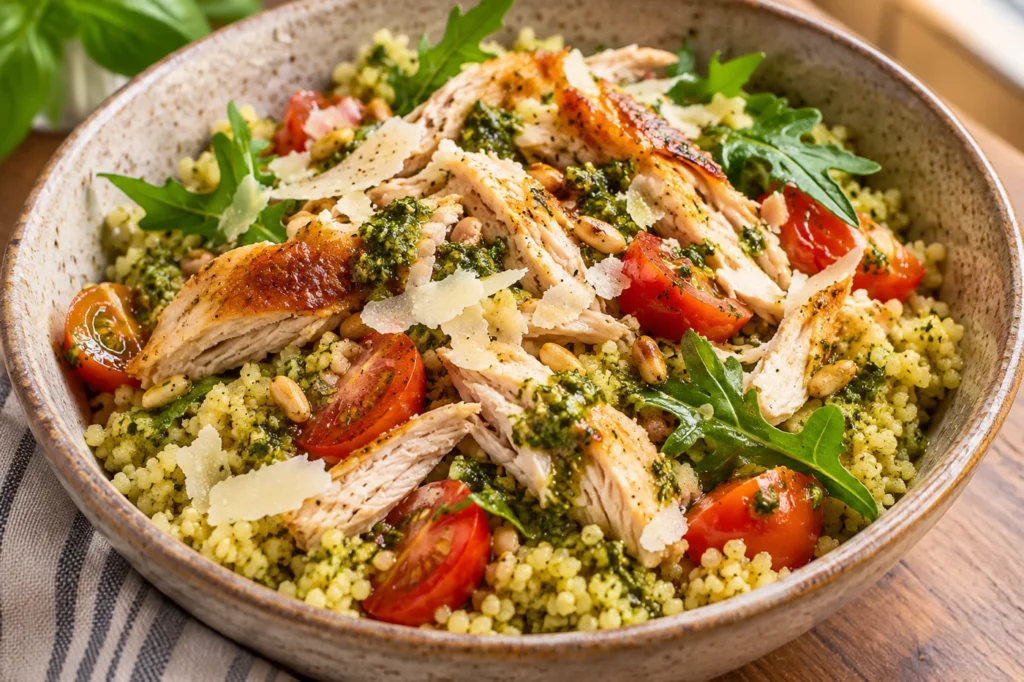
Rotisserie chicken pesto couscous bowls solve dinner with a kettle, a bowl and a few supermarket staples. Regular instant couscous softens in hot broth while you pull chicken from the bone and slice the tomatoes. Frozen peas add a little sweetness, and pesto seasons the grains as well as the meat. A final squeeze of lemon helps balance a rich pesto. The recipe serves four and takes about twenty minutes, including the time to set things out and warm the chicken.
Ingredients
- 1 cup regular instant couscous
- 1 cup low-sodium chicken or vegetable broth, or the amount on the package
- 1 cup frozen peas
- 2 cups shredded fully cooked rotisserie chicken
- 1 cup cherry tomatoes, halved
- ¼ cup basil pesto, plus more to taste
- 1 tablespoon lemon juice
- 2 tablespoons grated Parmesan, optional
- Black pepper and salt to taste
How to assemble the bowls
Hydrate the couscous
Bring the broth to a boil. Put the couscous into a large heatproof bowl. Pour the broth over it, stir once and cover immediately with a plate or lid that fits. Leave for about five minutes or the time indicated on the package. Remove the cover and use a fork to break up clumps. Separate the grains by drawing the fork horizontally across the bowl rather than pressing down on the couscous.
Heat the peas and chicken
Cook the peas using their package directions and drain well. If the chicken is chilled, add it to a small skillet with a spoonful of broth and heat it through. Keep it covered for the first minute so it warms without drying. Break any long shreds into bite-size pieces. If the chicken includes a strongly seasoned skin, use as much of it as you like and taste the combined bowl before adding salt.
Dress and divide
Stir the pesto and lemon juice into the warm couscous. Add the chicken and drained peas and fold just until combined. Spoon into four shallow bowls. Scatter the halved tomatoes on top, finish with pepper and add Parmesan if desired. Taste before pouring in any extra pesto. A familiar jar may be mild while another is salty or heavily flavored with garlic.
Instant couscous versus pearl couscous
Regular instant couscous consists of tiny grains that soften simply by standing in hot liquid. Pearl couscous is larger and needs active cooking. If you have pearl couscous, cook it in a saucepan according to its package, drain if necessary, and dress it once tender. Do not use the kettle method or the same amount of liquid without checking the packet. The larger pearls make the finished bowl chewier, and you may want another spoonful of pesto because it coats them differently.
Keeping the bowl bright and loose
Drain the peas thoroughly to avoid pockets of water. If the couscous feels dry, add a spoonful of broth before increasing the pesto. An extra spoonful of oily pesto can make the bowl feel heavy when all it needs is moisture. Slice the tomatoes just before using them if possible. Small tomatoes keep their shape well and bring enough acidity that you can use less lemon. If they are bland, give them a light pinch of salt in a separate bowl before adding them.
What else can go in?
Try thin cucumber slices in place of some tomatoes for a cooler crunch. Chopped roasted peppers work if drained. If you do not have cooked chicken, drained chickpeas give the bowl body and absorb the pesto. Warm the chickpeas with the peas for a completely warm dinner. Basil pesto commonly contains cheese and pine nuts or other nuts. Check the label if serving a vegetarian diner or a person with a relevant allergy. Use a suitable pesto or a simple lemon and olive oil dressing if necessary.
How to pack leftovers
Store the couscous, peas and chicken covered in the refrigerator and keep juicy tomatoes separate when practical. Reheat the grain and chicken mixture until steaming and then add the tomatoes. If you want a cold lunch, combine refrigerated portions and taste for lemon just before eating. Extra pesto can be stored according to the jar instructions or frozen in small portions. A little thawed pesto stirred into a fresh bowl is usually enough to bring back the basil aroma.
A dinner with one bowl and a microwave
If you have a microwave handy, warm the cooked chicken and peas together in a separate covered microwave-safe dish, following the pea package directions. Drain excess moisture before mixing. This saves the skillet and works well when you are cooking in a small kitchen.
For a portable portion, use a wide container with enough room for the grains to stay loose. Stir the chilled portion before adding tomatoes. If the grains feel dry, a teaspoon of lemon juice and a little olive oil can refresh the dressing at serving time.