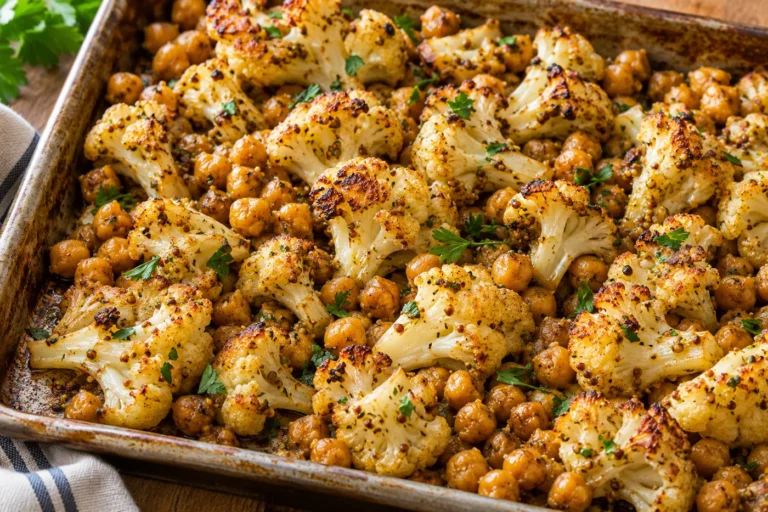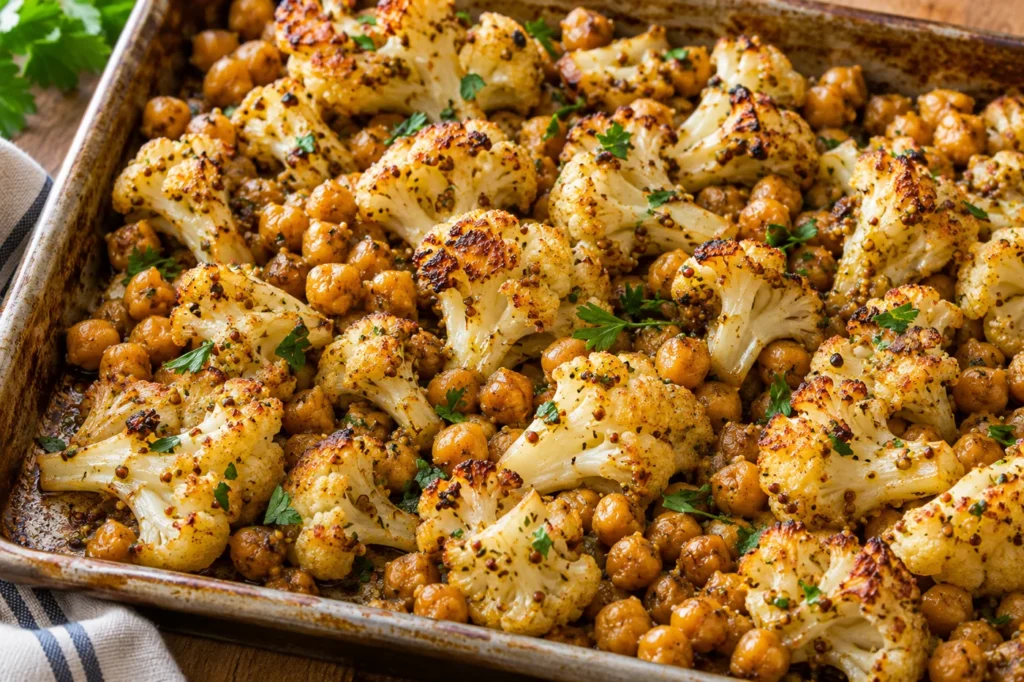
Sheet pan Dijon chickpeas and cauliflower is the dinner to make when you want the oven to do the work. The cauliflower softens at the center and takes on color where it touches the pan. Dry chickpeas roast alongside it and give the finished plates some bite. A little mustard coats the vegetables before cooking, while lemon goes on at the end when its flavor stays fresh. Serve over warm flatbread or with a spoonful of yogurt. The recipe makes four modest servings or three larger ones, with about ten minutes of preparation and thirty minutes in the oven.
Ingredients
- 1 medium cauliflower, about 1½ pounds before trimming
- 2 cans chickpeas, 15 ounces each, drained and rinsed
- 3 tablespoons olive oil, divided
- 1 tablespoon Dijon mustard
- ½ teaspoon smoked paprika
- ½ teaspoon garlic powder
- ½ teaspoon fine salt, plus more to taste
- Freshly ground black pepper
- 1 to 2 tablespoons lemon juice
- Chopped parsley, plain yogurt, or warm flatbread to serve
How to roast the chickpeas and cauliflower
Dry the chickpeas and cut the cauliflower
Heat the oven to 425°F (220°C) and set out a large rimmed metal tray. Drain the chickpeas and spread them on a clean kitchen towel. Pat them dry so their surfaces can brown. A few skins may come loose. Pick them out if you like, but there is no need to peel every chickpea. Cut the cauliflower into florets about an inch and a half wide. Slice larger florets through the base to make a flat side. Peel the main stem and slice the tender center if you want to use it too.
Coat and spread the tray
Whisk two tablespoons of oil with the mustard, paprika, garlic powder and half the salt. Toss it with the cauliflower until you see a thin coating on the florets. Toss the chickpeas with the remaining oil and salt. Keep them toward one side of the tray so they can be removed separately if they finish first. Lay the cauliflower flat-side down where possible. Leave gaps so the moisture can escape instead of settling around the food.
Roast and finish with lemon
Roast for about fifteen minutes. Shake the chickpeas and turn the cauliflower with a spatula. Return the tray for another twelve to fifteen minutes, until the cauliflower yields to a fork and has browned on some of the cut sides. Check the chickpeas toward the end. They should be firm on the outside and tender in the middle. Transfer everything to serving plates and add lemon juice, pepper and parsley. Taste before adding salt.
What to do if your tray is too full
Use a second tray if you have a large cauliflower or smaller pans. A crowded tray traps steam from the cauliflower and gives the chickpeas little room to dry. Put the trays on separate racks and swap positions halfway through. The top rack may brown the vegetables faster. If roasting on one tray, start with the cauliflower and add the chickpeas after a few minutes only if the pan is large enough to spread both out. Otherwise separate batches give a better result.
Ways to make it a full meal
Warm flatbread while the tray finishes and spoon the vegetables on top with yogurt. For a grain bowl, put the chickpeas and cauliflower over cooked rice, couscous or quinoa. A few leaves of arugula add a fresh bite. Choose one base and one topping to keep dinner uncomplicated. For a dairy-free sauce, loosen tahini with cold water and lemon juice. Start with small amounts of water, since tahini often tightens briefly before it turns smooth and pourable.
Changes to the seasoning
Whole-grain mustard adds visible seeds and works in place of Dijon. Smoked paprika is mild, but hot paprika gives the chickpeas a stronger finish. Replace garlic powder with a small amount of grated fresh garlic mixed into the yogurt, where it will not burn during roasting. A few chopped olives or capers can add salt and acidity when lemon is unavailable. If you use either, season the cooked tray before deciding whether to add extra salt.
Leftovers and reheating
Refrigerate the roasted vegetables separately from any sauce or flatbread. Reheat them on a hot tray or in a dry skillet. A microwave works if you are happy with a softer texture. Leftovers also make a good filling for a wrap with crunchy lettuce. If you want more contrast, keep the lettuce cold and add it only after the filling is warm. Do not dress the whole tray if you plan to save portions for another day.
If you prefer softer chickpeas, tuck them between the cauliflower florets for the last few minutes. For firmer edges, keep them separate and transfer to a plate as soon as they roast to your taste. Finish each plate with lemon instead of saturating the pan.